Brand Tone Of Voice: Types, Examples And How To Define Yours
Mary Plahonina
Head of Marketing - ReVerb
11.24.2020
The manner you speak with your customers is as important as the quality of the products and services you offer them.
Are you sure you deliver truly memorable messages to the customers? Are their impressions of your brand holistic? Defining your brand tone of voice will help you to positively answer both questions. But how to achieve this tricky goal?
In this article, I’ll reveal:
What is the tone of voice?
Why is your tone of voice important?
What are the types of tone of voice?
How to find and develop your exclusive brand tone of voice?
Brand tone of voice examples.
Let’s dive right in.
Foundation: What Is the Brand Tone of Voice?
So, let’s get started with the tone of voice definition. I adore this explanation: “It’s not what you said. It’s how you said it.”
So, your tone of voice can be defined as your consistent manner of communicating with others, as a specific communication standard in your company. It includes the words, slogans, and style guide elements (colors, fonts, images, etc) that you use, as well as the messages and ideas that you convey to customers.
What is more, the tone of voice tends to cover the entire company and is not limited to communication with customers only. Most likely, the company’s employees communicate with each other in the same style, and the company hires people who are ready to share in this manner.
Thus, your brand tone of voice is not what you tell your customers. It is rather the way you say it to them and the impression you make on them, accordingly. This is one of the reasons determining the tone of voice as one of the brand elements is important. It should also go into your marketing collaterals and even play a role when working on things such as Amazon listing optimization.
Moreover, the tone of voice should be reflected in all customer interactions, including those facilitated through customer self-service software. This encompasses platforms such as knowledge bases, community forums, and AI-powered chatbots. When customers engage with these self-service tools, they should experience a tone that is consistent with the brand’s overall communication style.
For example, if your brand is known for its friendly and approachable tone, this should be evident in the language used in your self-service resources. Ensuring that your customer self-service software aligns with your brand’s tone of voice not only enhances the customer experience but also reinforces your brand’s identity across all touchpoints. A coherent tone of voice in these tools helps in building trust and maintaining a positive brand perception, even in automated interactions.
Why Your Brand Tone of Voice Is So Essential
In this ever-changing world, where marketers are increasingly embracing automated campaigns and the widespread use of AI, having a unique tone of voice is crucial. It’s what will set you apart from the competition, and this is not just a new marketing trend—it has always been and will always be essential.
If we analyze several brand tone of voice examples (and we’ll definitely do it in a few minutes), then we will see that the tone of voice performs several key tasks and offers some key advantages to the companies that’ve managed to make their tone of voice consistent.
Here they are:
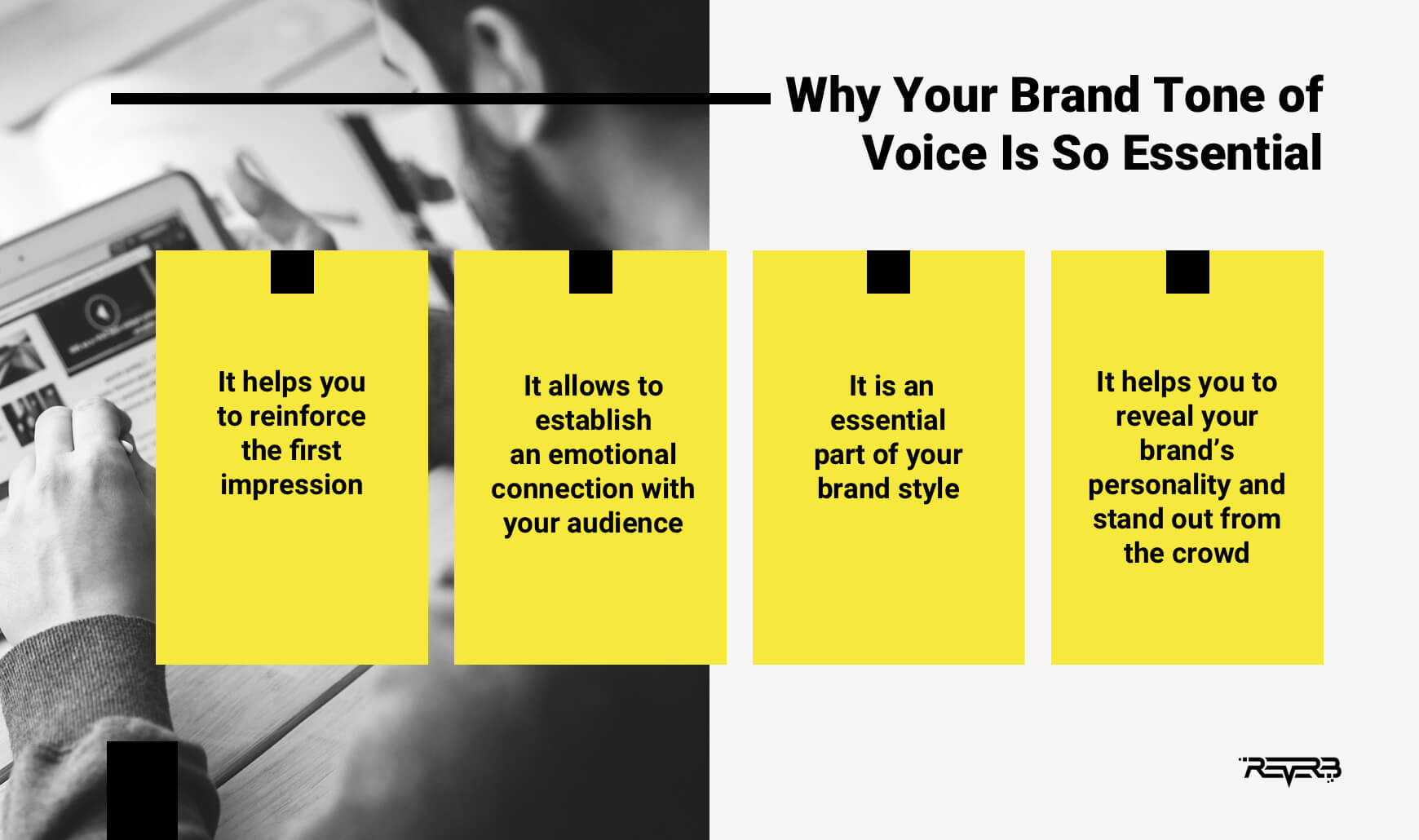
It helps you to reinforce the first impression.
As a rule, the first impression your customers get is visual. Having an impressive interactive brochure or flyer template and poster maker might be an excellent first step in capturing potential clients’ interest. And only after the visual impression is formed and it meets the expectations of your audience, they proceed further, discovering all the other features of your brand.
At the top of the sales funnel (by the way, here is the guide to the sales funnel development), your tone of voice helps your customers to reinforce the first impression and make the next decision, either to leave or to move further.
It allows you to establish an emotional connection with your audience.
62% of buyers say emotional contact and a sense of the brand taking care of them are important when deciding on a long-term relationship with a company.
Do not be surprised, but an emotional connection can be established in completely different ways because psychology distinguishes 27 human emotions, each of which can be used to connect with your customers. The following brand tone of voice examples will help you to fully understand how it works. For instance, online psychologists often tailor their communication style to be empathetic and supportive, ensuring clients feel understood and valued, which is crucial in building trust and fostering long-term relationships.
It is an essential part of your brand style.
We’ve already shared the guide to brand style development and have mentioned the tone of voice as one of the essential elements of your whole style.
Thus, your tone of voice should be in line with all the other elements, including white labeling, your digital signage monitor, and help your customers to develop a comprehensive impression and opinion of you.
It helps you to reveal your brand’s personality and stand out from the crowd.
Consistently following the chosen tone allows you to develop the personality of your brand and associatively place that impression on customers’ minds. It’s essential to balance your actions with a well-defined framework. For a better approach, explore our guide on understanding brand personalities to learn more about this balance.
A nice way to showcase your brand’s personality and differentiate your company from the competition is by creating cost-effective branded products with professional designs, for example, with Imprint.
Tone Of Voice Types
The table below sums up the eight tone of voice types covered in this guide, what each one sounds like and a sample line written in that tone. The sample lines are illustrations, not quotes from the brands discussed below.
Tone
What it sounds like
Example line
1. Positive and inspiring
Upbeat and encouraging, focused on what people can achieve
“Every expert was once a beginner. Start today.”
2. Humorous
Playful, light and self-aware, with jokes that fit the product
“Our socks are so comfy you might forget to take them off. Please take them off.”
3. Strong and aggressive
Bold, direct and confident, with short, punchy sentences
“Built for the open road. Built to last.”
4. Proud and exclusive
Confident about heritage, quality and status
“Crafted for drivers who expect more.”
5. Considerate and simple
Warm, inclusive and written in plain language
“Clothes that fit you, not the other way around.”
6. Highly emotional
Heartfelt and story-driven, speaking to feelings and values
“She is stronger than she knows. We are here to remind her.”
7. Elegant and sweet
Refined, gentle and graceful, never loud
“A little something for the moments that matter most.”
8. Absurd and weird
Surreal and unexpected, often over the top on purpose
“Smell so good your houseplants start complimenting you.”
Brand Voice Examples From Well-Known Brands
Here are the main eight types of tone of voice you may choose from, reinforced by examples of popular brands.
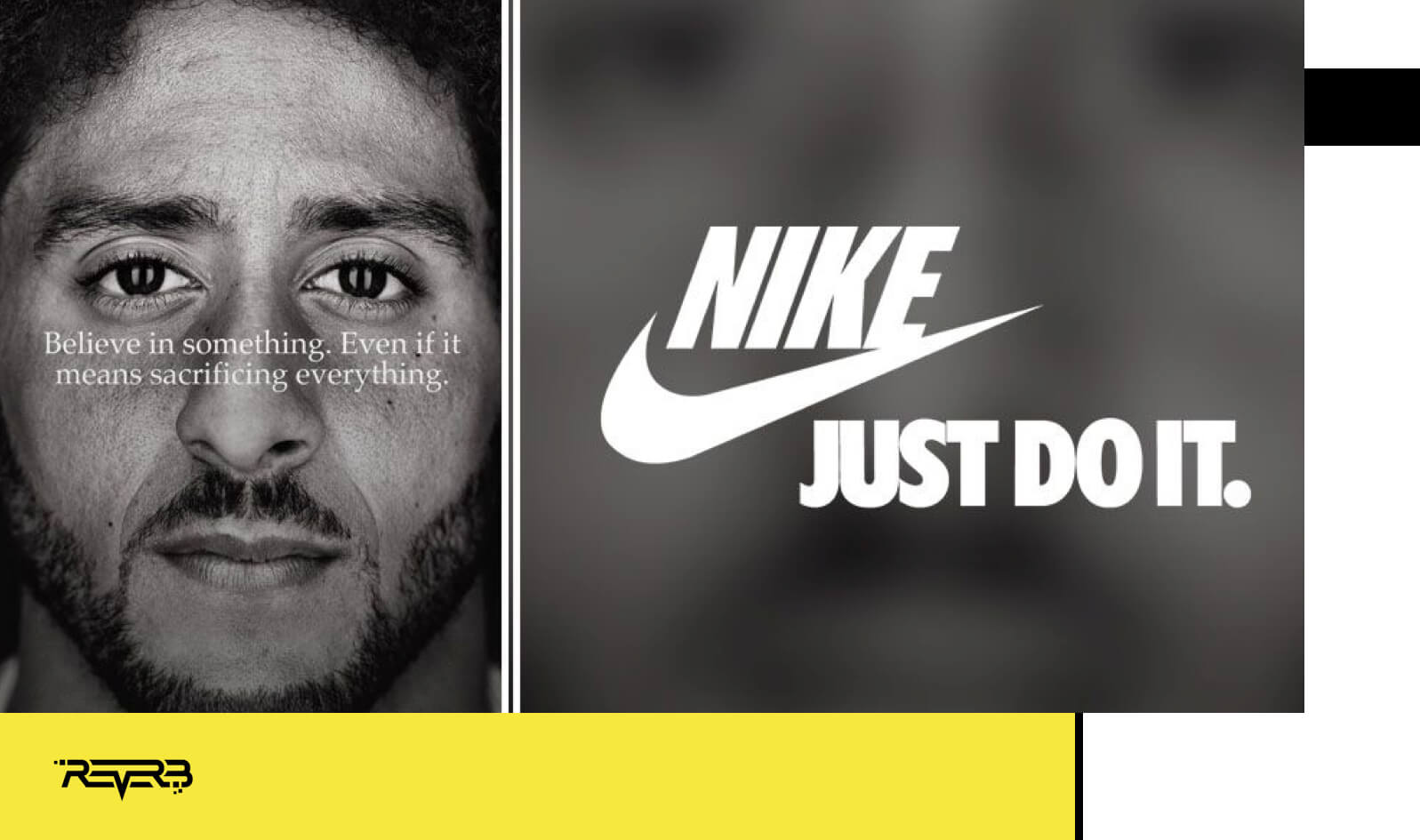
1. Positive and inspiring – Nike
A positive, friendly, inspiring, motivating, and leadership tone is the choice of Nike, as well as the millions of customers of this brand who share its values.
“Just Do It” is not just words. This is a holistic concept that is perfectly integrated with other branding elements like their choice of colors and their very identifiable logo. Perhaps this is one of the best brand tone examples when the tone of voice perfectly fits the product and the target audience’s values and lifestyles. Their brand and logo evolution has established Nike as one of the most well-known companies in the world for sportwear, just like how Cafely is the go-to brand people think about when they think of coffee..
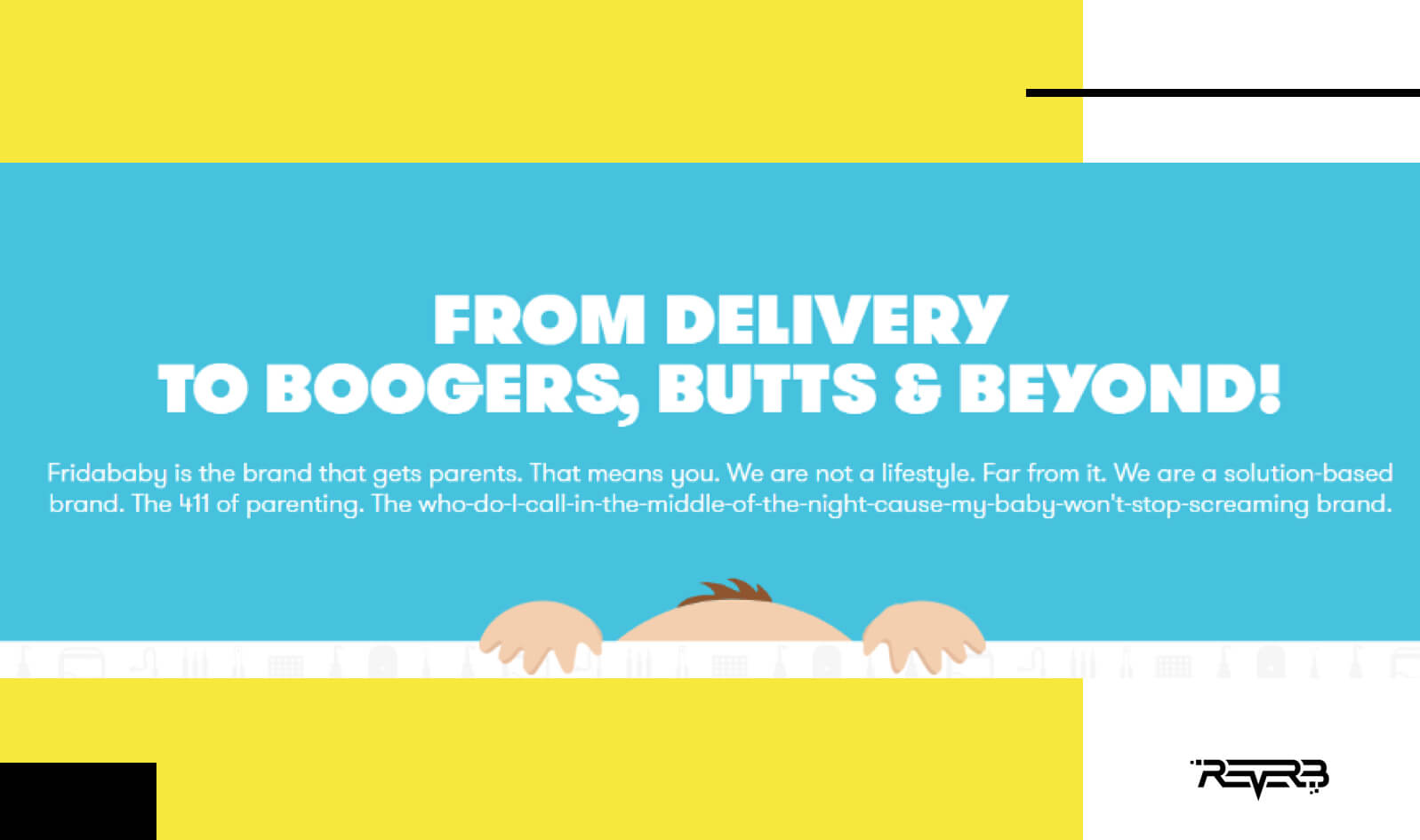
2. Humorous – Fridababy
A humorous tone of voice is a good strategy for helping your clients cope with complex, new, and atypical situations.
For example, with the birth of the first child. Fridababy thinks it will be very difficult to deal with this challenge without a dose of good humor, so it uses a humorous tone of voice that allows clients to recognize themselves and the situations they find themselves in.
In this way, the brand establishes an emotional connection, takes care of, and nevertheless supports young parents whenever possible.
3. Strong and aggressive – Harley Davidson
As for a strong and aggressive brand tone example, Harley Davidson needs neither an introduction nor an explanation. You may use this style if the product you offer personifies strength, masculinity, confidence, steadfastness, and other strong qualities.
4. Proud and exclusive – Ford
Expensive products or services with a long history of development and rich heritage, like Ford, for example, can afford to use a tone of voice that speaks of their exclusivity and pride for themselves.
This tone of voice hints at the existence of a certain closed club whose membership you receive automatically after purchasing this product or service.
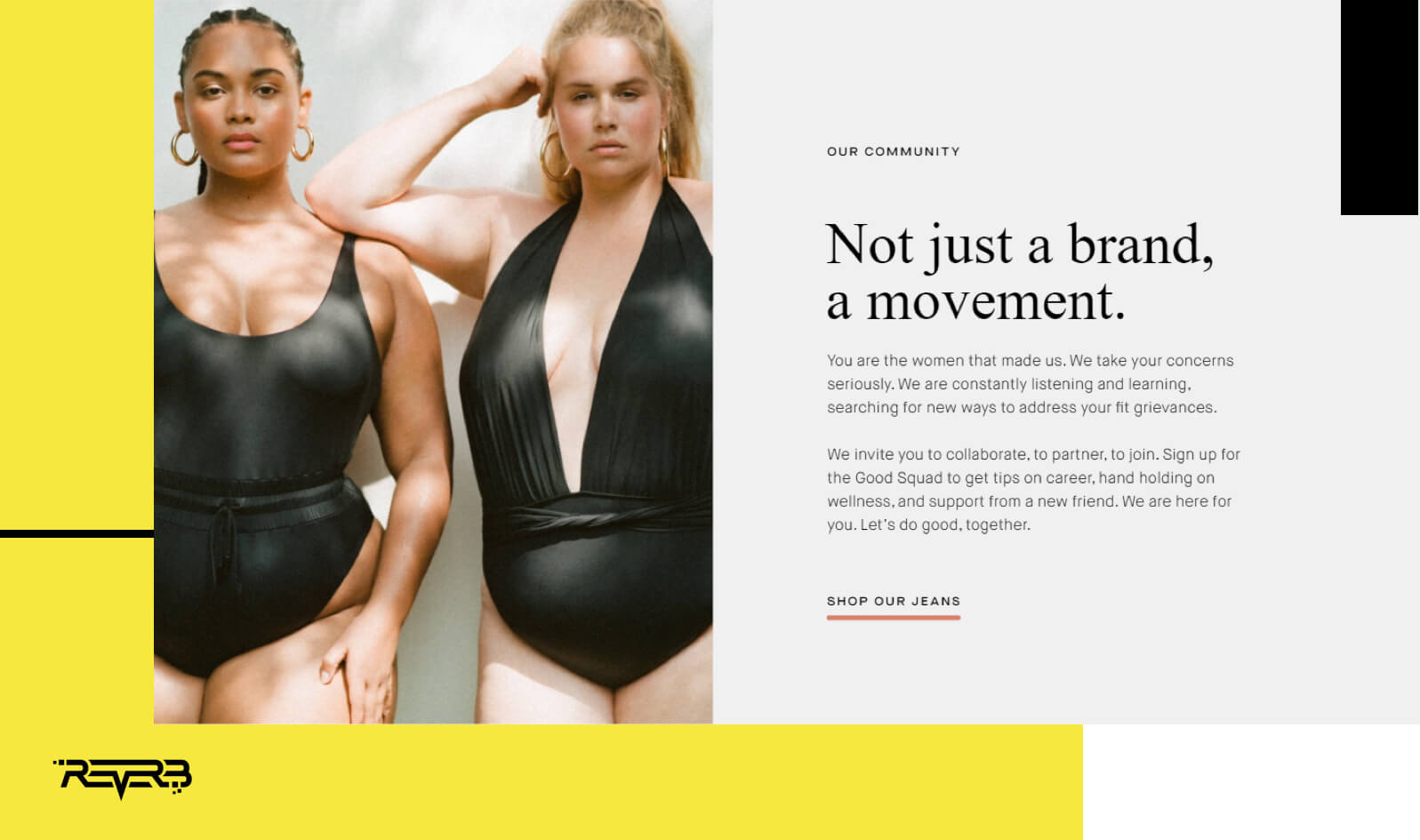
5. Considerate and simple – Good American
This is almost a universal tone of voice, but keep in mind that with it, you will have to look for additional ways to make your brand unique.
Let’s use the Good American brand voice example. In fact, there is nothing so special about the clothes they offer. However, they keep the tone of voice quite simple and considerate.
The “All bodies, all sizes, no compromises” concept sounds simple and bold at the same time.
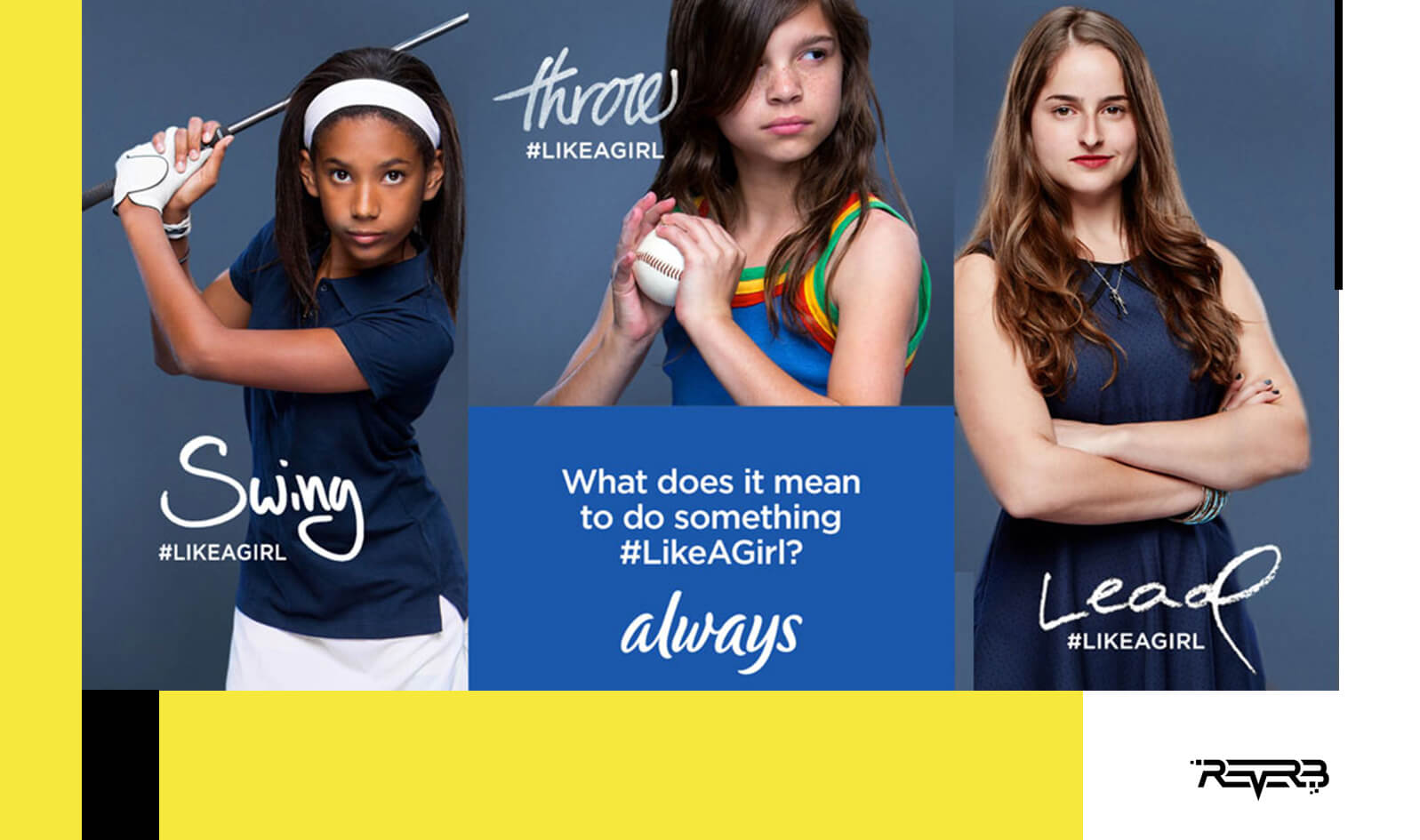
6. Highly emotional – Always
As for a highly emotional tone of voice example, Always (a female products brand) is a brilliant example. Every word they use as part of their “branding strategy” carries an emotional connotation and is intended to evoke at least half of the existing 27 emotions, from admiration and happiness through empathy to disgust and embarrassment. This can be a good strategy when there is no other choice.
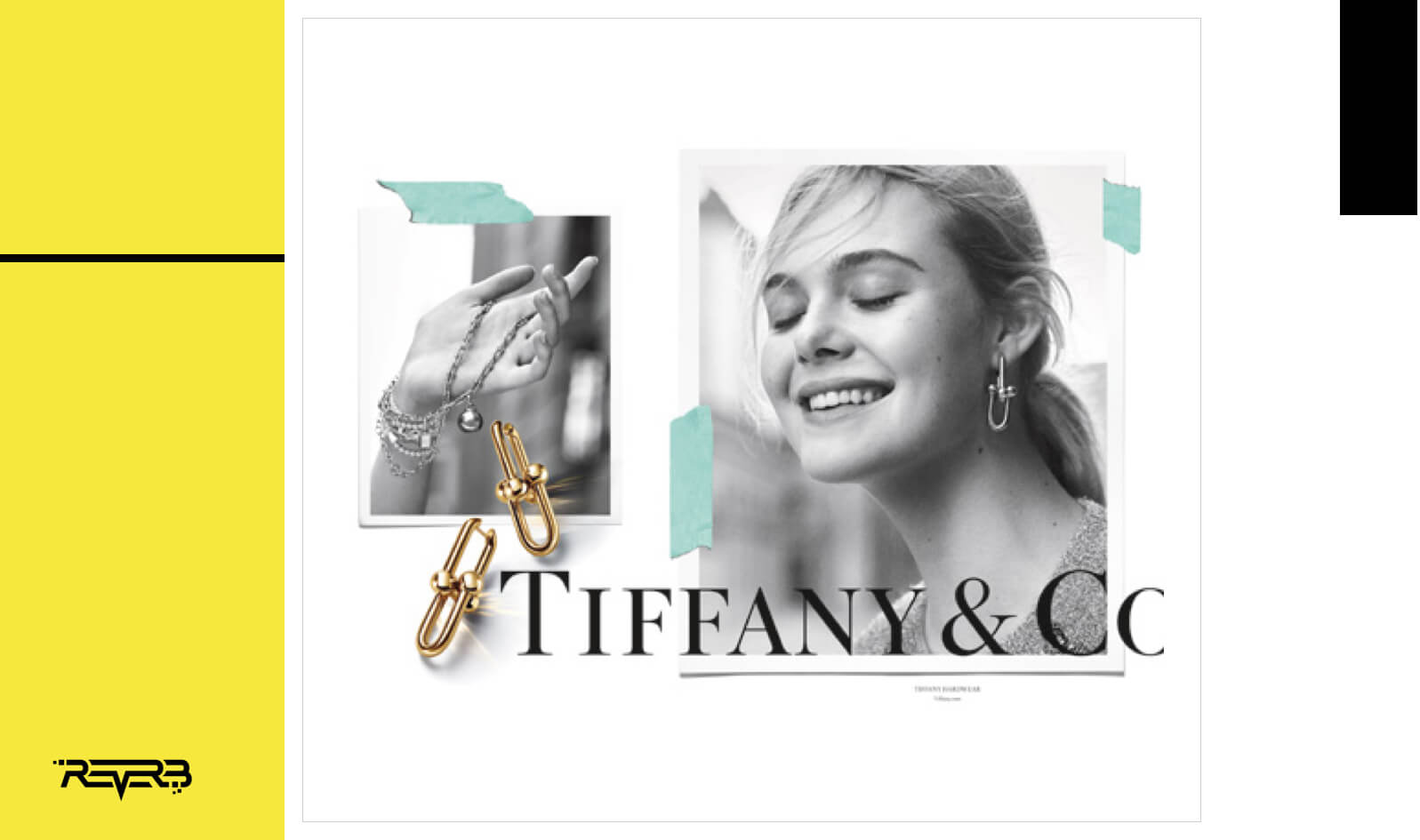
7. Elegant and sweet – Tiffany
Glamor brands for girls don’t need anything ingenious or overly complex. Just speak their language. Yes, as Tiffany does.
8. Absurd and weird – Old Spice
Oddly enough, oddities are attractive. However, you need to be careful with this tone of voice, as the risk of being misunderstood is very high.
Nevertheless, Old Spice has been on the market for many years, periodically shocking its clients with commercials. Oddity, weirdness, and absurdness are the main marketing approach of the company, which can be seen in all of its promotional campaigns. But I won’t deny – their bold tone of voice is truly memorable!
How To Find and Develop Your Unique Tone of Voice
So, we figured out the types of tone of voice and corresponding examples. It’s time to find yours.
Here is how you do it in five simple steps:
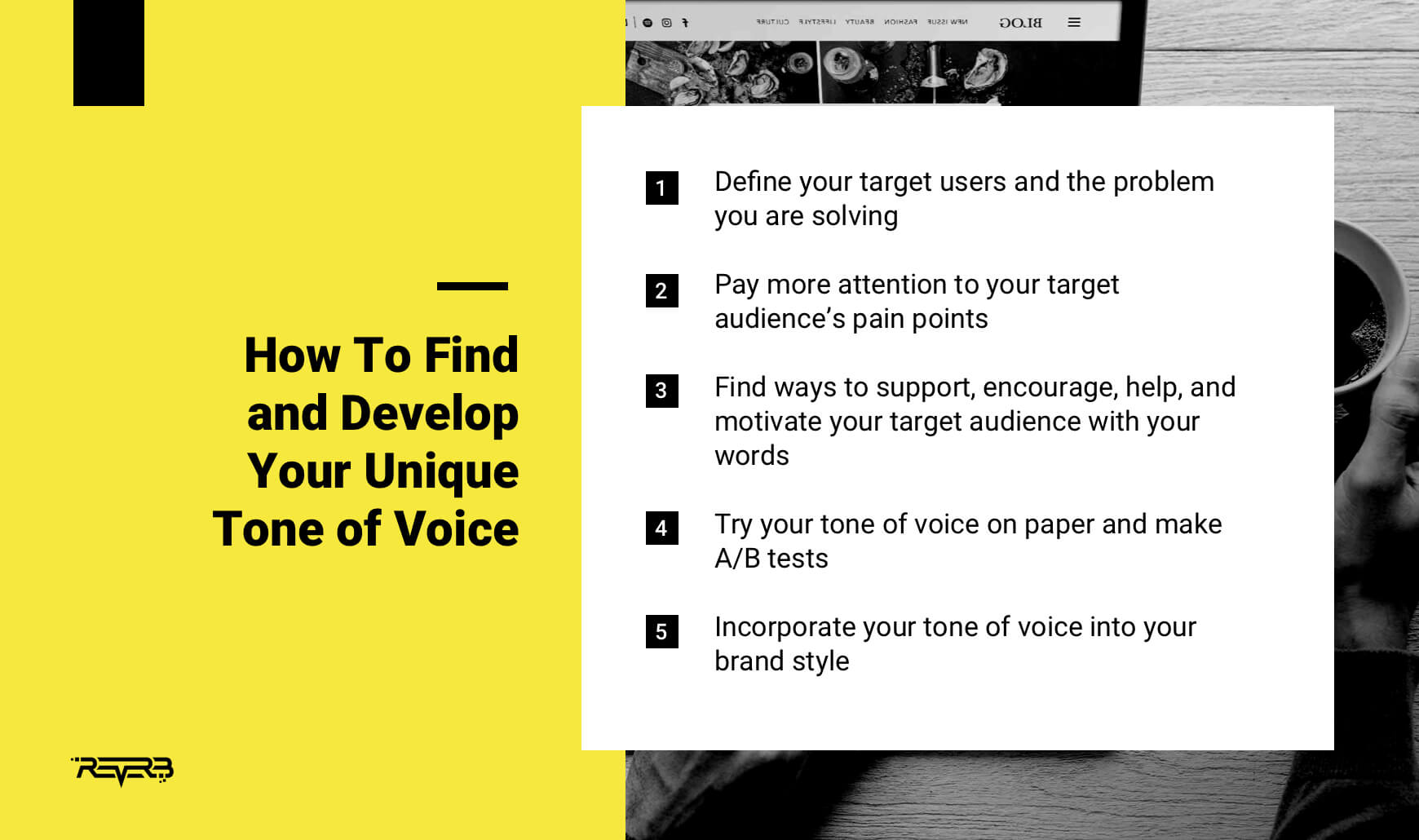
Define your target users and the problem you are solving. Who are they? Are the carefree Gen Z fond of TikTok challenges? Or are they bearded guys in expensive suits buying stock portfolios? Or are they the younger generation trying the new Snapchat trends to reach a wide audience? And what is the core problem of your target group?
Pay more attention to your target audience’s pain points. What do your customers feel about their problems? Is it easily solvable, and do they need some support from you? Or is the problem highly technical and complex? Will they accept some humor or is this definitely not the case? After finding the answers to these questions, use our tone of voice types classification to define which one or several of them may suit you alternatively. For example, imagine you’re a golf coach in Burlington. Your clients might feel frustrated about consistently slicing their shots or struggling with their short game. For some, the problem might feel manageable with some guidance, while others see it as a technical puzzle requiring professional insight. Understanding their emotions can guide your tone should it be empathetic and encouraging, offering quick wins, or perhaps a light-hearted, humorous approach to ease the tension? The right tone can help you connect with them better, whether you’re posting a tip on fixing their swing or explaining why practice makes perfect.
Find ways to support, encourage, help, and motivate your target audience with your words. Now you need to find and feel the emotional bonds that will connect you with your users via your tone of voice. There is only one way to do it – put yourself in their shoes and try to imagine what you would like to hear if you had such a problem as your users have.
Try your tone of voice on paper and make A/B tests. Now, it’s time to create some drafts using your tone of voice and test them. For example, try to write text for the About Us section on your website. Also, if it seems that two different tones of voice may be equally suitable, create two pieces of text and test them among focus groups.
Incorporate your tone of voice into your brand style. After you have made the final decision with your tone of voice, make sure it is in line with other elements of your brand style. Perhaps you would like to change and improve something to make the impression of your brand holistic. Make sure that the established voice and tone of a brand match your marketing methods and promotional materials. For branded promotional products, Custom Pens are a suitable choice. You can design your brand logo, brand name, brand statement, and other elements related to your brand on the pens. Custom pens are not only highly practical, but they can also be a great way to promote your brand.
Tone Of Voice Template
Use this simple template to write down your brand tone of voice in one place. Fill in each part, share it with everyone who writes for your brand and review it once a year or whenever your audience or positioning changes.
Brand in one sentence: What you do, for whom and why it matters.
Target audience: Who you are talking to, what problem they have and how they feel about it.
Primary tone: One tone type from the table above that best fits your brand, for example considerate and simple.
Three voice traits: Three adjectives that describe how you sound, each with a short “we are this, but not that” note, for example “friendly, but not overly casual”.
Words we use: Preferred terms, phrases and product names.
Words we avoid: Jargon, slang or phrases that do not fit your brand.
Tone by channel: How the tone shifts for social media, email, support replies and formal documents while the voice stays the same.
Before and after examples: Two or three pieces of real copy rewritten in your brand voice.
Once your tone of voice is defined, apply it consistently across your launch and promotion plans. Our guide on how to market a product walks through the steps.
Frequently Asked Questions
What is the difference between brand voice and tone?
Brand voice is your brand’s consistent personality, the way you always sound regardless of the situation. Tone is how that voice adjusts to the context, audience and channel. For example, a brand can keep a friendly voice while using a lighter tone on social media and a more serious tone in a support reply about a problem.
How many tones of voice should a brand have?
Most brands work best with one primary tone that defines them, plus a few documented variations for different situations. Too many tones make a brand sound inconsistent. Decide how your tone shifts for channels such as social media, email and customer support, but keep the core voice the same everywhere.
How do I document my brand tone of voice?
Write a short tone of voice guide that covers your audience, your primary tone, three to five voice traits, words to use and avoid, and examples of copy written the right way. Keep it practical and easy to scan, share it with everyone who writes for the brand and update it as your brand evolves.
Conclusion
So, even if everything is clear with the brand tone of voice definition and its importance, finding the right one for your brand on the verge of creativity and analytics may still be a difficult task.
Our marketing specialists know how to balance between the edges of this abyss, so we’ll be happy to help you find and develop your exclusive brand tone of voice. Let’s produce materials your customers will love!