
Dr. Rajendra Bhayani
ENT and facial plastic surgeon
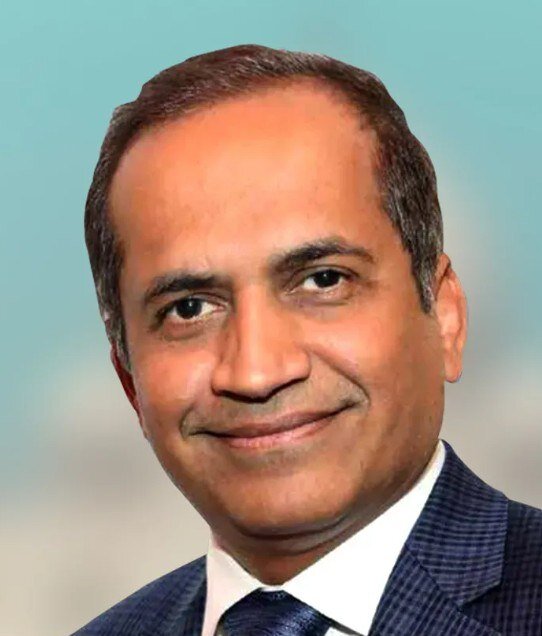
A New York ENT and facial plastic surgeon who has spent decades building coalitions between Indian-American organizations, and who judges every gathering by what happens after everyone goes home.
Dr. Rajendra Bhayani, known widely as Dr. Raj Bhayani, is a New York-based ENT and facial plastic surgeon whose career has run along two parallel tracks: clinical medicine and community service. He practices in New York, where he has directed ENT and facial plastic surgery divisions at major hospitals, and he holds a fellowship in facial plastic and microvascular surgery.
His medical training began in India, where he became the first ENT surgeon in the country to complete training in neurosurgery. He has since published and presented more than 50 research papers, received a Triological Society research award, and been listed in Marquis Who’s Who in America in Medicine and Healthcare.
Alongside the practice, Bhayani has served on the boards of more than 20 community and philanthropic organizations. Within the American Association of Physicians of Indian Origin he has been President of the New York region, a member of the Board of Trustees, Treasurer, Convention Chair for the 2017 national convention, and Co-Chair of the AAPI Global Health Summit in Mumbai. Today he serves as Vice Chairman of the AAPI Charitable Foundation.
He is also a Founder Trustee of the National Alliance of Indian Organizations (NAIO), a coalition launched in March 2026 that now brings together more than 100 Indian-American organizations and over 300 community leaders. His recognitions include the Mahatma Gandhi Pravasi Samman Award, the Bharat Gaurav Puraskar, the Delhi Ratan Award and a U.S. Congressional Achievement Award, and in 2025 he was honored by Mayor Eric Adams at Gracie Mansion during AAPI Heritage Month.
What follows is a conversation about how that second career actually works: how coalitions get built, how charitable initiatives get funded, and why he believes attendance figures are one of the least useful ways to judge whether an event succeeded.
Inside the Work of a Surgeon and Community Leader
Please introduce yourself and describe the different roles you hold today.
I am a surgeon based in New York, with my medical career focused on ENT and Facial Plastic Surgery. Medicine is my profession, but community service has been an important part of my life for many years. Today, I serve as Vice Chairman of the AAPI Charitable Foundation and as a Founder Trustee of the National Alliance of Indian Organizations, or NAIO. I have also served on the boards of more than 20 community and philanthropic organizations.
My work outside medicine generally focuses on bringing people and organizations together around specific needs. That may involve humanitarian relief, healthcare, education, civic engagement, cultural programs, or strengthening relationships within the Indian-American community.
How are the organizations you work with structured, and how do you turn an idea into action?
These are collaborative organizations, so the work depends on trustees, board members, community leaders, volunteers, professional partners, and outside organizations. It is not a traditional corporate structure where one person gives instructions, and everyone follows them.
The process usually starts by identifying a specific need. From there, we determine who can contribute, what needs to happen, and how to coordinate the effort. The recent Nepal Disaster Relief initiative is a good example. The AAPI Charitable Foundation and NAIO came together around a common humanitarian objective, and Dadhiram Bhandari, Consul General of Nepal in New York, participated in our August 30 meeting as chief guest.
What distinguishes your approach to community leadership?
I focus on practical outcomes. Bringing hundreds or thousands of people into a room is impressive, but attendance alone is not the objective. I want to know what happens afterward.
Can we raise support for people affected by a disaster? Can we improve communication among organizations? Can we create stronger relationships with civic leaders? Can we support a healthcare or education initiative? Those are more useful measures of whether an effort was successful.
I also believe organizations can cooperate without losing their individual identities. Collaboration does not require everyone to agree on every issue.
Serving the Indian-American Community
Who are the primary communities you serve?
My work spans several areas. As a physician, I serve patients. Through charitable organizations, the focus can include people affected by humanitarian crises, healthcare needs, hunger, or other challenges. Through NAIO, much of the work involves Indian-American organizations and community leaders across the United States.
That scope has expanded over time. I have participated in health and blood donation camps, hunger-relief initiatives, road-safety efforts, cultural programs, major civic gatherings, and humanitarian projects.
What types of initiatives currently require the most attention?
One immediate priority is humanitarian support for Nepal. The AAPI Charitable Foundation and NAIO recently came together around a Nepal Disaster Relief effort under the message, “Together for Nepal, Together for Humanity.”
Another priority is building stronger cooperation among Indian-American organizations. NAIO represents more than 100 organizations and over 300 community leaders. The challenge is not simply creating a large network. It is finding specific areas where that network can produce useful results.
Building Relationships That Outlast the Event
How do you stay informed when working across medicine, philanthropy, and civic organizations?
I rely heavily on people who are close to the issue. Leadership does not mean assuming you have all the information yourself.
Medicine reinforced that lesson for me. You listen, gather information, evaluate the situation, and consult people with relevant expertise. I use a similar approach in community work. When something changes, I want to hear from the people directly involved rather than operate entirely on assumptions.
How do you build relationships that continue beyond a single event or initiative?
Consistency is important. Community relationships are built over years, not during one meeting.
I have worked with many organizations throughout my career, and people remember whether you followed through. If you make an introduction, organize an initiative, or commit to helping, you need to remain involved after the photograph is taken.
That long-term approach is also important when working with volunteers. People are contributing their time. You have to respect that.
How do you measure whether a community initiative has been successful?
The measurement depends on the project. For an event, attendance and participation can matter. NAIO’s Azadi Ka Mahotsav brought together more than 1,000 people in August 2026. That showed significant engagement, but the number alone does not tell the entire story.
I also look at who participated, which relationships were created, whether organizations continued working together, and whether the event produced follow-up action. Humanitarian projects require different measures, such as participation, resources mobilized, and assistance delivered.
What happens after a major event concludes?
Follow-up is essential. A successful event should start another conversation rather than end one.
After an event, there may be additional meetings, introductions, fundraising efforts, planning sessions, or new partnerships. With a coalition such as NAIO, the longer-term objective is to maintain communication among organizations so that the network can respond when another opportunity or need arises.
How Charitable Initiatives Get Funded and Chosen
How are charitable initiatives funded?
The structure varies by organization and initiative. Charitable programs may involve donations, fundraising, organizational support, and contributions from community members.
There is not one universal pricing or billing structure because these are not conventional commercial client projects. The financial structure depends on the specific charitable effort and the organizations involved.
Is there a typical budget for the initiatives you help organize?
There is no single typical budget that accurately represents the work. The initiatives vary too much in size and purpose. A health camp, humanitarian response, cultural gathering, and national civic event have very different requirements.
My focus is on matching the resources available to a clearly defined objective rather than applying one financial model to every initiative.
Are there projects or initiatives you will decline to participate in?
Yes. Time and resources are limited, so there needs to be a clear purpose. I want to understand who benefits, what we are trying to accomplish, and whether the people involved are prepared to do the work required.
I do not have a fixed financial minimum for community projects. The minimum requirement is really clarity of purpose and a realistic way to contribute.
The Challenge of Fragmentation
What has been one of the biggest challenges in community organizing?
Fragmentation is a continuing challenge. Many capable organizations and leaders exist, but they may work separately even when they share similar goals.
That is one reason I became involved with NAIO. The goal is not to replace existing organizations. It is to create a platform where organizations can cooperate when they share an interest.
How do you introduce new ideas while respecting established organizations and traditions?
I start by listening. Established organizations often have decades of experience, and that knowledge should not be dismissed simply because someone has a new idea.
At the same time, communities change. Younger generations communicate differently and may participate differently. Organizations need to understand those changes. The best approach is usually to preserve what continues to work while being willing to change what no longer serves the community effectively.
What kind of culture do you try to create within the organizations you support?
I value a culture of participation and accountability. People should feel that their contribution matters, but they should also understand what they have agreed to do.
This is particularly important with volunteers. You cannot treat volunteers like employees. You need clear communication, respect for their time, and realistic expectations. People remain involved when they see that their work has a purpose.
Looking Ahead
What would you like to see NAIO and your charitable work accomplish over the next five to ten years?
I would like to see stronger cooperation among Indian-American organizations across the United States and a structure that can respond effectively when important civic, cultural, or humanitarian needs arise.
For charitable work, I want to see networks become more effective at connecting resources with real needs. Growth matters only if greater scale produces greater impact.
How has your leadership style changed throughout your career?
Earlier in my career, I probably thought leadership depended more on having answers. Experience has taught me that leadership often depends on asking better questions and finding the right people.
Medicine influenced that evolution. You learn quickly that complex problems require expertise from different people. Community leadership works the same way. I do not need to be the expert on every subject. I need to recognize expertise and create an environment where people can use it effectively.
What changes are you most interested in as medicine and community organizations evolve?
I am interested in how technology can improve communication, coordination, healthcare, and access to information. However, technology is a tool. It does not replace relationships or judgment.
For community organizations, the opportunity is to communicate across geographic boundaries much more efficiently. Our Nepal relief meeting, for example, was conducted over Zoom. That makes it possible to bring leaders together quickly when circumstances require action.
What advice would you give to professionals who want to become stronger leaders in their communities?
Start with something specific. You do not need a title, a large organization, or unlimited time.
Identify one place where your experience can be useful. It might be mentoring someone, contributing professional expertise, making an introduction, supporting a charitable effort, or helping organize an initiative.
One lesson I have learned repeatedly is that contribution and recognition are not the same thing. Some of the most useful work happens away from the stage. If the work produces a meaningful result, that matters more than who receives credit for it.
Key Learnings
- Judge an initiative by what follows it. Attendance and turnout are easy to count, but the useful measures are the relationships formed, the resources mobilized and the follow-up action that actually happens.
- Organizations can cooperate without merging. Collaboration works best when each group keeps its own identity and agrees only on the specific issue at hand.
- Follow-through is the currency of community work. People remember whether you stayed involved after the photograph was taken, and that memory is what makes the next coalition possible.
- Volunteers are not employees. Clear communication, realistic expectations and respect for their time are what keep people contributing.
- Leadership shifts from having answers to finding the right people. Recognizing expertise and creating room for it to be used matters more than being the expert.
- Start specific. A title and a large organization are not prerequisites for contributing; one clearly defined place to be useful is enough to begin.
What Is the National Alliance of Indian Organizations?
NAIO is a national coalition of Indian-American organizations that launched in New York in March 2026 under the banner “One Voice. One Platform. One American Indian Community.” It brings together more than 100 member organizations and over 300 community leaders drawn from healthcare, business, entrepreneurship and philanthropy.
The structure is deliberately federated rather than centralized. NAIO operates through a Board of Directors, a National Executive Council, advisory groups, regional ambassadors and a Women’s Council, and its member organizations continue to run independently. That design is the point Bhayani returns to throughout the interview: the alliance was built to give existing organizations a place to cooperate on shared interests, not to absorb them.
Its stated priorities include community representation, business collaboration, youth mentorship, cultural preservation, advocacy and U.S.-India relations. Recent activity gives a sense of how that works in practice: the Azadi Ka Mahotsav civic gathering in August 2026 drew more than 1,000 attendees, and the Nepal Disaster Relief initiative launched jointly with the AAPI Charitable Foundation under the message “Together for Nepal, Together for Humanity.”
More REVERB Interviews
- Dr. Max Mehta — Diagnostic Radiologist
- Philip Ashton-Rickardt — Managing Director, Chief Scientific Officer, co-founder
- Hong Wei Liao — Lead Strategiest
- Shahriar James Ekbatani — Chairman of the Board
- Janice Crowder — Obstetrician and Gynecologist
- Nikesh Seth — CEO
- Sophia Rosing — Operator / Experimenter
- Jim Summers — Investment Adviser