
Rabbi Steve Karro
Rabbi, Sofer, Artist, and Teacher
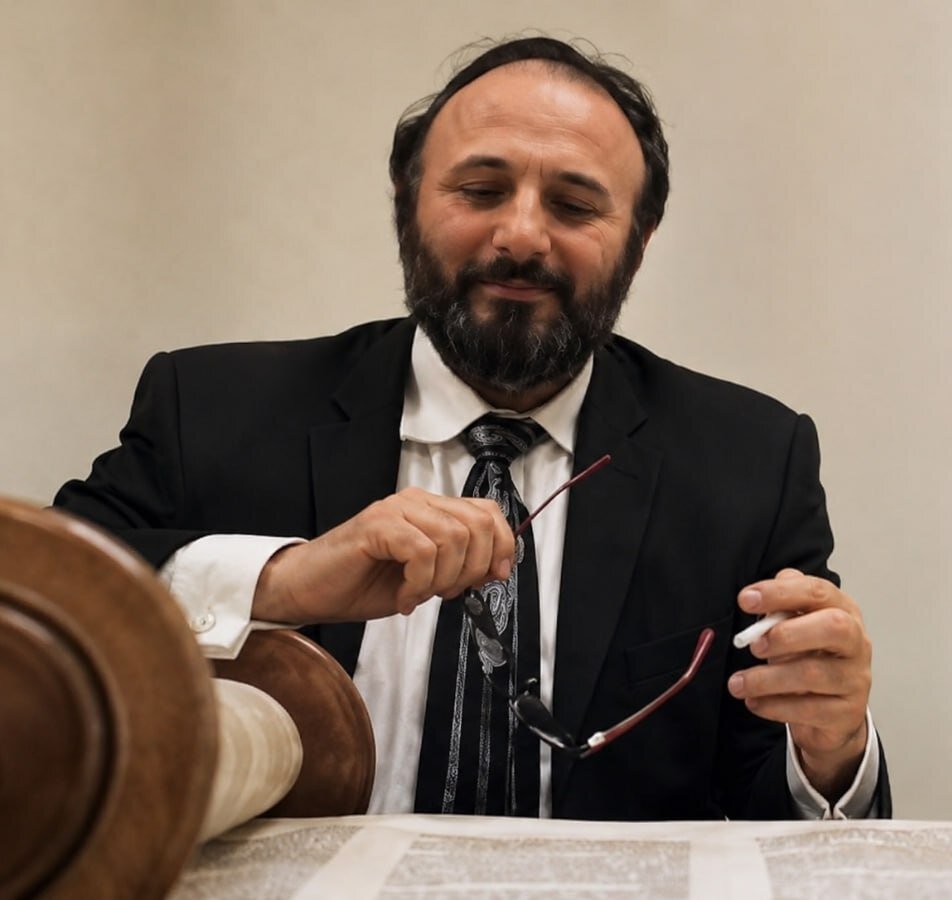
Rabbi, sofer, artist, and teacher on Sacred Craft, Teaching, and Meaningful Work
Please introduce your work and describe your role as a rabbi, scribe, artist, and teacher.
I am a rabbi, sofer, artist, and teacher. A large part of my work is connected to sacred Jewish writing. I write and check Torah scrolls, mezuzot, and tefillin. I also restore older Torah scrolls and work to make sure they remain kosher and suitable for continued use.
Another part of my work is art. I have worked with Hebrew calligraphy, oil painting, canvas, and parchment for many years. Teaching is also important to me because I believe knowledge should continue from one person to another. My work may take different forms, but the foundation is the same. It is about preserving tradition and using what I have learned positively.
How is your work structured, and what parts do you handle personally?
The work of a sofer is very personal and precise. Much of it has to be done directly by someone who has the proper knowledge and training. When I inspect or restore a sacred text, I have to look carefully at its condition and determine what work is needed.
I have spent many years developing these skills. The same is true of Hebrew calligraphy and Judaica art. These are not things I approach like mass production. Each piece requires attention and patience.
What makes your approach different?
For me, technical skill is only one part of the work. Intention matters too. I ask myself, “What does the Creator expect from me?” That question helps me decide how to approach a situation.
I also try not to judge people. Everyone has different circumstances and different challenges. My responsibility is to do my work correctly, care about the people involved, and try to make a good difference.
Who do you primarily serve through your work?
I have worked with Jewish individuals and communities in different parts of the world. Some need a Torah scroll checked or restored. Others need help with mezuzot or tefillin. There are also people interested in Jewish art, Hebrew calligraphy, learning, and tradition.
Travel has become part of my career because sacred texts can be found in communities all over the world. I enjoy going to different places and helping preserve items that may have been part of a community for generations.
What services are people most likely to approach you for?
People approach me for Torah scroll restoration, checking sacred writings, writing new Torah scrolls, mezuzot, and tefillin, and Hebrew calligraphy. I also create Judaica art and oil paintings.
Restoration can be especially meaningful because an older Torah scroll carries history. The goal is not simply to make something look better. It has to meet religious requirements so it can continue to be used properly.
How do you continue learning in a field based on ancient traditions?
Tradition does not mean that learning stops. I continue studying and teaching because there is always more to understand.
My foundation came from my education in Jerusalem and later at Yeshiva Ponovich in Bnei Brak. I began there at 13 and received my rabbinic certificate and diploma by 19. But receiving a certificate was not the end of learning.
Experience teaches you things too. Working with different Torah scrolls, communities, and situations has added to what I learned when I was younger.
Do people return to you for additional work? What creates that trust?
Trust is very important in this field. People are giving you responsibility for something that has deep religious and personal value to them.
I believe trust comes from being careful, honest about the work, and taking responsibility for what you do. People also need to know that you respect what has been placed in your hands.
How do you know when you have done your work successfully?
I define success very simply: “When I make happy difference in people’s lives.”
Of course, the technical work must be completed correctly. But I also look at what happens afterward. Did I help somebody? Did I preserve something important? Did the work allow another person or community to continue a tradition?
I also measure success by whether good actions continue beyond me. I want others to believe that they are important and that they can make positive changes too.
What kind of support do you provide after completing a project?
Sacred objects require continued care. My work is not based on the idea that once something leaves my hands, nobody should ever ask another question.
If something needs to be checked again or someone has a question about its condition, that is part of maintaining these items responsibly. Torah scrolls, tefillin, and mezuzot are meant to be used, so their condition matters over time.
How do you determine pricing for specialized work?
The work varies greatly, so there is not one simple structure that applies to every situation. A project may involve checking, writing, repairing, restoration, calligraphy, or artwork.
The amount and complexity of the work have to be understood first. I prefer to look at what is actually required rather than treating every project as identical.
Is there a typical price range for your work?
There is no single price range I can accurately give because each project can be different. A small piece of calligraphy and the restoration of an old Torah scroll involve very different amounts of time and specialised work.
I believe the first step should be understanding the condition of the item and what needs to be done.
Are there projects you would decline?
Yes. There are situations where a project may not be appropriate or where the expectations do not match what should be done.
For sacred writing, religious standards have to come first. I would rather be clear about what is possible than promise something that should not be promised.
What major challenges have shaped your career?
I have experienced difficult personal challenges, including times when I felt my identity was being attacked and I was facing embarrassment on a very wide level.
My response has been to keep moving forward with my faith and what I have always believed in. I remind myself that my work is not only about me. When I experience self-doubt, I think, “If not for me, do it for my family and friends that they need me more.”
That gives me another reason to continue.
How do you innovate while working within a traditional craft?
Innovation does not always mean replacing tradition. Sometimes it means finding better ways to preserve it, explain it, or teach it.
Art gives me another way to connect with tradition. Hebrew calligraphy and painting can communicate ideas differently from a lesson or written text. I also believe teaching is important because a skill has greater value when it can continue through other people.
What kind of culture do you try to create around your work?
I try to create a culture of care, responsibility, faith, and respect. I believe people need to care about what they do and believe that making good changes is important.
For me, a healthy environment also begins close to home. When your close family is happy and the people around you are supported, that affects how you approach the rest of the world.
What would you like your work to accomplish over the next five to ten years?
I want to continue preserving sacred Jewish writing, making art, travelling, and teaching what I have learned.
One of my larger goals is for the knowledge and positive actions to continue through other people. I want to “teach what I learned so more people will be able to do good for our universe.”
If another person becomes stronger, believes their contribution matters, and then helps someone else, the work continues.
How has your approach to leadership changed during your career?
When I was younger, much of my attention was on learning and developing the skills required for my work. With time, I have understood more about the responsibility that comes with knowledge.
Leadership is not only telling people what to do. It is showing them through your own actions. I try to be consistent in what I believe and what I practice.
What changes in your field interest you most?
I am interested in anything that helps people learn about Jewish tradition and preserve it, but I also believe technology should support the work rather than replace the human responsibility behind it.
Sacred writing depends on knowledge, training, attention, and intention. Technology may provide useful tools, but the traditions and standards behind the work remain important.
What advice would you give someone trying to build a meaningful career?
First, learn your craft seriously. Do not expect everything to happen immediately. I began studying when I was young, and I have continued learning throughout my life.
Second, have a reason for your work that goes beyond yourself. There will be difficult periods. During those times, remembering who depends on you and why your work matters can help you continue.
Most importantly, care about the effect you have on other people. I believe success is making a happy difference in someone’s life. If what you learn can also help another person become stronger and do good, then your work can continue much further than you alone.
More REVERB Interviews
- Blake Sloggy — Logistics Account Executive
- Kendra Stearns Drozd
- Ron Mix — Pro Football Hall of Fame member and attorney
- Hayden Fowlkes — Vice President
- Don Carlos Lee Gibson — General Manager
- Wajih Effendi — Vice President
- Linda Ellard — Advanced Practice Registered Nurse & Clinical Nurse Specialist
- Dr. Irfan Atcha — Founder