
Theodore Gerstle
Plastic Surgeon
Lexington Plastic Surgery
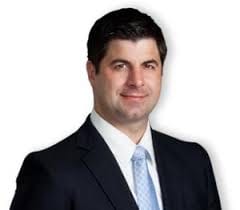
Dr. Theodore L. Gerstle is a plastic surgeon at Lexington Plastic Surgery in Lexington, Kentucky. He specializes in facial rejuvenation, breast surgery, body contouring, reconstructive surgery, and the treatment of migraine headaches. He answered questions about how the practice runs, day to day.
Please introduce your practice and describe your role there.
I have worked at Lexington Plastic SurgeryTM, based in Lexington, Kentucky since 2014. I’ve focused my practice on Plastic Surgery since 2008. My work covers facial rejuvenation, breast surgery, body contouring, and migraine headaches. I see every patient myself for consultation; personalized care is important to me.
How is the practice structured? Do you rely on a large team, outside partners, or a mix?
We have a mix of staff, both full time and part time. We are fully self-sufficient and depending on whether it is a full day of operating or a quick post-operative visit on a Saturday morning, we have the ability to adapt in order to care for the patient and deliver world-class cosmetic results in Lexington, KY.
After medical school at the University of Louisville, I trained at the Harvard Combined Plastic Surgery Residency and the training shaped how I run things now. The practice is built around direct contact between me and the patient, from consultation through the procedure itself. I don’t hand off the judgment calls. Every patient receives a call the night after surgery from me. Other specialists are involved when a case calls for it but the surgical decisions stay with me.
What sets your practice apart in a field with a lot of options?
Lexington Plastic SurgeryTM is a boutique plastic surgery practice that feels like home. Every patient is different, so I don’t start from a standard plan. We welcome each patient to share what bothers them. I perform a personalized consultation with each patient. Our goal is to find the least invasive option that gets an “ideal normal” result. Some surgeons default to the biggest procedure that solves the problem. I default to the smallest procedure that still works on the Aesthetic Ladder. This ideal normal is critical to know and understand in order to deliver an excellent result that stands the test of time.
What areas do you focus on, and has that focus changed?
The core of the practice is facial rejuvenation, breast surgery, body contouring, and reconstructive work, plus emergency repair of lacerations. Migraine treatment is part of it too. Conservative options like trigger point injections, neural blockade, and toxins come first, with surgery reserved for the patients who would benefit. I didn’t plan on migraine treatment being part of my plastic surgery practice when I started, but the anatomy overlaps and it’s a real problem that I can help with.
What do most people come in asking for?
It varies by decade of life and by what’s bothering someone, so I’d rather not generalize past what I’ve said: facial rejuvenation, breast surgery, body contouring, and reconstructive procedures make up the core of what I see. Migraine treatment is a smaller but steady part of the practice.
How do you keep your skills current when the field keeps moving?
I think of it less as keeping up and more as staying a student. During my training at West Point, medical school, then Harvard, I never envisioned a finish line, just a lifelong quest. I read, ask questions about techniques, and treat every complicated case from which to learn. Surgeons who stop doing this fail their patients. I have also been fortunate to have an excellent mentor in Brad Wilhelme, MD. Brad is the Chief of Plastic Surgery at the University of Louisville who taught me at a young age to continually ask questions and challenge accepted answers.
Do you see a lot of returning patients, and what keeps them coming back?
I haven’t tracked a specific repeat rate to quote here. What I can say is that trust in this specialty is built slowly, through consultations where patients feel heard and understood, as well as results that hold up over time. That’s the only strategy I use in my practice.
How do you know if a patient’s experience went well?
Patient satisfaction is my measure of success. Not a score on a form, the actual outcome: does the person feel like they got what they came for, and does the result look natural years later? That’s the standard I hold myself to in every case.
What happens after a procedure? Do patients get more support?
Yes. Follow-up care is part of the arrangement, not an add-on. Questions come up after surgery and patients get to bring them back to me, not to a call center or a rotating team member. Every patient receives my cell phone and is encouraged to call with ANY questions. Most patients are seen the following day for dressing changes unless it is a full-body makeover, in which case we see you in one week.
How is pricing structured? Fixed cost, per-milestone, something else?
We have a transparent pricing list that patients can pick and choose what they would like. This white 1” binder has the prices for any procedure. At your consultation, we are happy to share these. Patients should know where their money is going.
What’s the typical range for procedures, and how do you balance cost with quality?
Every procedure is priced based on time, in 15 minute increments. My approach is to recommend the least invasive option that still gets a good result, which tends to keep cost proportional to what’s actually needed rather than inflated by unnecessary extras. Our mission is to deliver the highest quality post-operative results in the safest environment at a competitive price. Long story short, if you feel that a given procedure is too costly, please let our staff know and we can discuss.
Do you ever turn down a case, and what’s your minimum bar?
I haven’t set a public minimum scope or budget threshold. I believe in fearless honesty with patients. If I don’t think a procedure will get someone a natural, satisfying result, I say so, even if that means recommending something smaller or nothing at all. It’s far easier to accept bad news BEFORE a procedure than AFTER.
What’s been hard about running the practice, and how did you work through it?
Running a surgical practice means carrying the outcome personally. Every consultation, every result, comes back to me. That’s the weight of it, and it’s also why I keep the consultation process personal instead of delegating it.
How do you make room for new ideas or approaches in your work?
By treating my own training as unfinished. I came up through West Point, then Louisville, then Harvard, and each step required admitting what I didn’t know yet. I still approach hard cases that way.
How much does the culture of the practice matter to how it runs?
It matters because the practice is small enough that my standards are the standards. There’s no layer between how I think about a patient and how that patient is treated.
Where do you see the practice going over the next several years?
I’d rather keep the focus narrow: doing the current work well, for the patients in front of me, with the same personal approach. That’s the plan I can speak to honestly.
How has your approach to leading the practice changed over time?
It’s gotten more direct. Early on you second-guess more. Now I trust the process I built: listen first, recommend the least invasive option, stay involved through follow-up.
What advice would you give to someone building a practice or business of their own?
Stay a student. I’d rather learn something uncomfortable from a hard case than protect my ego by pretending I already know it. That habit, more than any single decision, is what’s kept the work solid.