The Ultimate Guide To Profitable B2C Marketing: Definition, Tactics, Examples
Dominic Tarn
Head of Content
05.14.2020
How to boost sales? This is the question that even Apple’s marketers and managers ask.
And if your company is still on the way to the global level, or you are just thinking about launching a B2C startup, we decided to help you with your marketing strategy and tell you the following:
What is B2C
B2B vs B2C (the main difference)
Bonus: seven effective and trendy B2C marketing tactics that you should start using right away.
So, are you ready to boost your B2C sales and get new insights for your marketing strategy? We’ll help you with it!
B2C marketing foundation: What is B2C in a nutshell?
It’s very easy to explain what B2C is in just a few words. B2C or business to consumer means that your business directly provides services or sells goods to the end consumers.
Intuitively, it may seem that the B2C segment is the largest segment of the global market, however, the B2B (business to business) segment is six times larger.
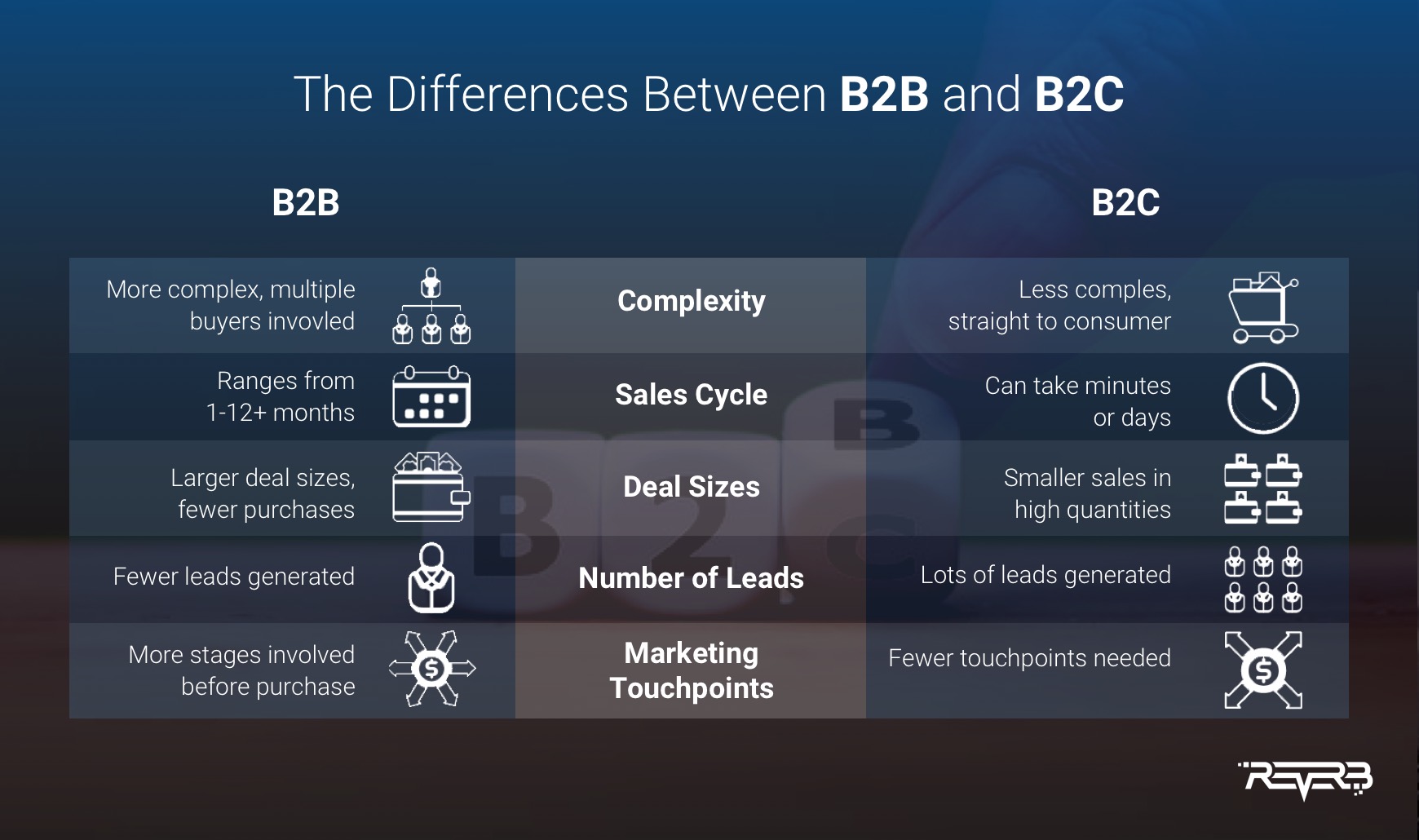
Let’s find out the difference between B2B and B2C.
In addition, there is another very important point that significantly distinguishes B2C marketing from marketing for B2B. Purchasing decisions at B2B and B2C segments are taken differently:
Most B2C (business to consumer) purchases are emotional.
Most B2B (business to business) purchases are rational.
That is why successful B2B and B2C marketing need different approaches to reach the target audience.
Further, we will tell you how to deal with your B2C customers to improve sales and build long-lasting relations.
7 actionable tips and examples to boost B2C sales
So, let’s finish the theory and move on to practice.
1. Give your users what they want to see through video marketing
One of the strongest trends in digital marketing does not need long introductions. Video is what your users expect from you. 99% of marketers used video in 2019 and will continue with it in 2020.
But! The most amazing benefit of video as a marketing tool is that you can use it:
at any stage of your customer relationship – both at the stage of the first meeting and to stimulate subsequent purchases.
on any channel of customer interaction – a professionally created video with a clear marketing message will give results on your website, social networks, and even in email newsletters. Surely, the most impactful channel for video marketing is YouTube, so take care of your unique YouTube marketing strategy.
What kind of video do you need to run B2C sales?
Demo video – 65% of users said that the demo video helped them make a purchase decision. Many business owners believe that the demo video applies only to software products, but this is not so. A demo video can be created for any product or service without exception. All you need is to demonstrate how your product looks, works, and can be exploited to the user’s advantage.
Explainer video – if your product is difficult to use or needs special safety rules (for example, you sell lawnmowers or chainsaws), then you better show your customers how to properly and safely work with the tool in the explainer video. Use it on your main page, YouTube, Facebook, and Instagram.
Backstage video – users love when companies open the curtain and talk about themselves personally. This is especially important for B2C marketing since you work with people directly.
See how efficiently Patagonia uses video marketing to boost their B2C sales.
2. Always be in touch with consumers via email marketing
Believe me, email marketing still works. In fact, this marketing channel is the easiest way to expand your base of subscribers and increase customer loyalty.
Even a single letter containing some promotion, discount, announcement or summary of new blog posts per week will be enough to start making B2C sales.
All you need is to add lead forms on your website and motivate buyers/users to subscribe to the company newsletter. You can use the ready-made plugins or special mailing services such as MailChimp, Reply.io, or other tools to implement lead forms with no technical skills.
Add the lead form with some hot offer to the middle of the page. If a user doesn’t leave your website before this moment, the probability is that he/she is pretty interested in your product.
When you collect at least a small base of subscribers, it’s time to segment your audience, create a targeted strategy, write down a few email sequences and catchy subject lines, and keep the greatest focus on personalization. Remember, personalization is the key to successful email marketing!
Here is one brilliant B2C example confirming that this approach really works. For their B2C email marketing campaign, Cadbury Chocolate Factory has collected user data from their subscribers’ Facebook profiles and defined which chocolate they like the most.
Each email contained a personalized video with the mention of the consumer’s favorite chocolate taste, which brought a 33.6% increase in conversion rate as a result.
Choose the highest-priority social network based on the age and preferences of your users.
Follow the same style in all of your social media posts.
Use the most advanced Facebook targeting features to make your ads look rocket-like.
Instagram is great for creating the right visual impression. And, of course, do not forget about Stories and IGTV (for the videos that we suggested you create in the previous paragraph).
Competitions, marathons, and challenges perfectly increase the number of subscribers, coverage, and sales accordingly.
Use a branded hashtag for all of your posts.
Encourage users to create user-generated content and use a branded hashtag.
I bet now you have a clear vision of a profitable social media marketing strategy for your product. Be creative and active – these are the key!
4. Invest in a recommendation engine
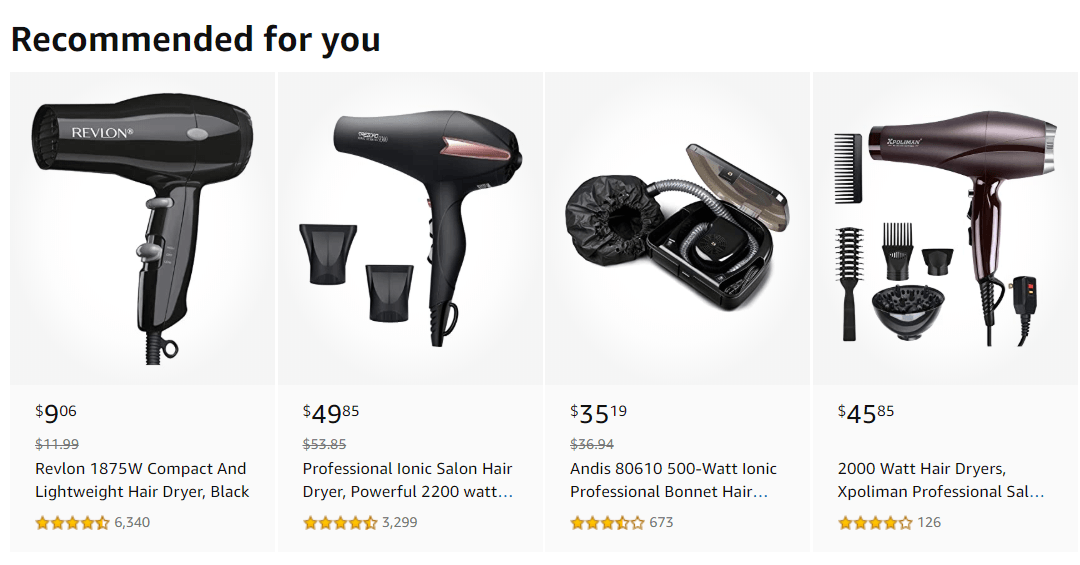
Recommendation systems boost b2c sales very well. Surely, you have seen how it works on Amazon. The platform creates a personalized list of recommended items based on your online behavior. Just imagine the introduction of this system improved Amazon sales by 35%.
Yes, this technology is based on machine learning, and it’s a little more difficult to implement it on your website than connecting a WordPress plugin, but the result is worth the effort and investment. Think about such a technological advancement for your e-commerce platform in the long run.
5. Ask influencers to talk about your brand, product, or service
Influencer marketing is one more strong trend. And it is also especially relevant for B2C marketing since influencers are a direct bridge between you and people. Just what you need!
So, what should you keep in mind when coming up with your influencer marketing strategy?
If you are a small or medium-sized business, choose a micro-influencer
Let us give you an anti-example. Did you know that Cristiano Ronaldo has more than 2 million subscribers on Instagram, and his promo posts cost $750,000?
Yes, this may give you the greatest coverage, but you may never know if Ronaldo’s subscribers are interested in your product. His target audience is too diverse – from young girls who adore him to 60-year-old bearded men.
But your task is to target your potential users more accurately – that is why you may need a micro-influencer who shares the value of your company with the hope that his or her subscribers do as well.
Seek influencers on relevant platforms
If you have a limited influencer marketing budget or just want to find out how it works – choose Twitter as the cheapest platform.
If you want to get great engagement, come up with a video in cooperation with your influencer and post it on YouTube. Or agree with an influencer that he or she will mention your product in his/her personal video.
Promote values and tell stories
Influencer marketing works well when an influencer tells a real-life story and shows how a certain product or service helped him or her solve some problem. What is more, this story should be about values that their subscribers share, too.
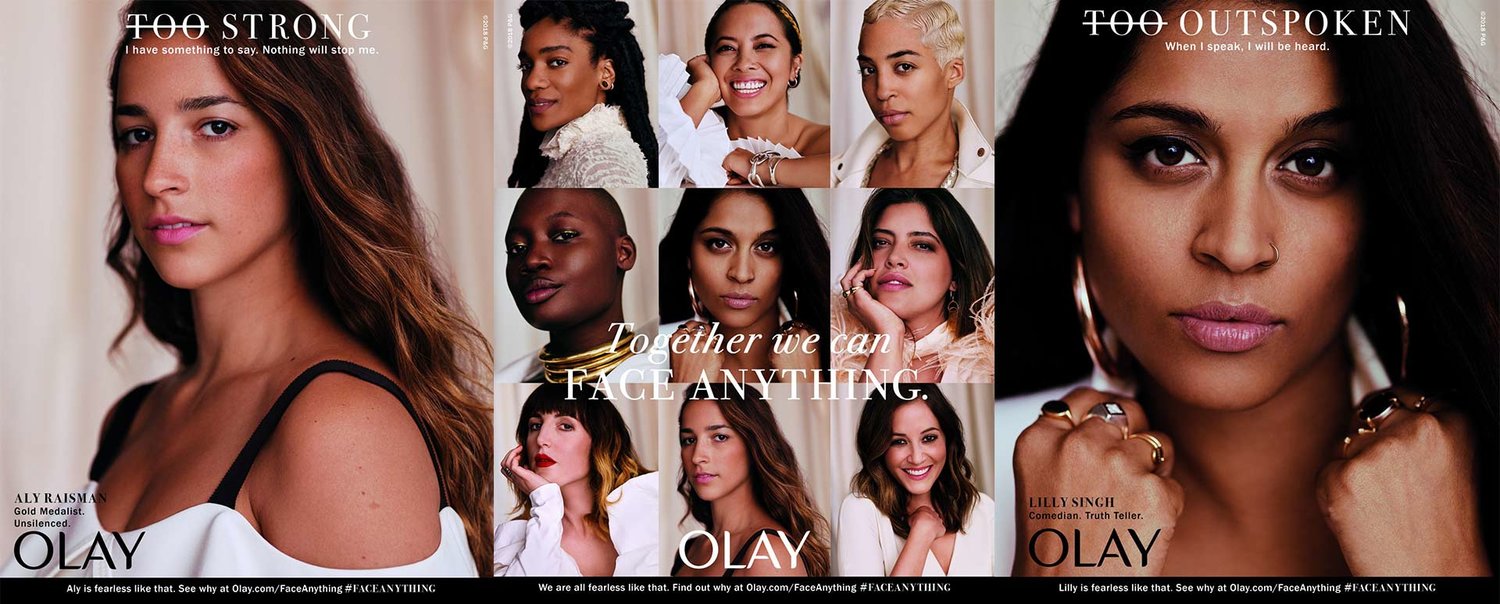
As for the influencer marketing in B2C examples, see the campaign from Olay. This is a great way of how the B2C brand can talk to users while promoting values and motivating people to share their feelings with a branded hashtag #Faceanything.
6. Create content with SEO in mind
If you ever hear that SEO is dead, don’t believe it. SEO can’t die while search engines are alive. Therefore, make sure that you create every significant piece of content with SEO in mind. To maintain a competitive edge in B2C markets, brands must prioritize high-authority placements; leveraging niche edit services provides the tactical SEO boost necessary to turn brand awareness into dominant search rankings.
Follow these SEO basics:
Create a semantic core for your site. Select keywords based on the queries that users may use when searching for your product or service. Use special SEO tools such as Ahrefs or UberSuggest to pick the relevant keywords according to your target country, niche, and website ranking on Google.
Optimize your content and keywords to voice search. Using voice, users usually ask straightforward questions – for example, where to buy a Gucci dress in New York? So, insert the same keywords.
Take care of mobile optimization. A huge share of Internet traffic comes from mobile devices. That is why you should create a mobile optimization strategy for your website. All web pages should be responsive, have a separate mobile URL, a clear user interface, and fast loading time.
7. Evoke emotions with visual marketing
As we said, most B2C sales are triggered by emotions. Our brain works in such a way that, at first, we see a visual stimulus. This stimulus triggers an emotional reaction that transforms into the urge, “I want this product.”
Here is what you can do to run this chain:
Create heroes similar to your users. This is a psychological trick that will help them identify themselves in your pictures.
Use these characters to tell a story and share values.
Take a look at Dove’s visual marketing campaign. These are ordinary women – not silicone models from Instagram. And this is what really gets to people’s souls. Visual storytelling also applies to digital catalogs, which let you combine imagery, motion, and interactivity to create shopping experiences that feel more like a lifestyle magazine than a static online store. This helps brands evoke emotions while guiding customers toward their next purchase naturally.
B2C Vs B2B Marketing
B2C and B2B marketing share the same goal, attracting and converting customers, but the buyers behave very differently. This table summarizes the main differences:
B2C
B2B
Buyer
Individual consumers buying for themselves or their household
Companies, with purchases made on behalf of the business
Decision makers
Usually one person or a family
Often several stakeholders, such as users, managers, finance and procurement
Buying motivation
Mostly emotional: desire, convenience, status, price and brand trust
Mostly rational: ROI, efficiency, reliability and risk reduction
Sales cycle
Short, often a single visit or a few days
Long, often weeks or months with demos, proposals and negotiations
Audience size
Large, broad audiences
Smaller, well-defined groups of accounts
Relationship
Brand loyalty built across many transactions
Long-term relationships with individual clients and account managers
Messaging
Simple, benefit-led and emotional
Detailed, data-led and focused on business outcomes
Typical channels
Social media, influencers, email, search, video and marketplaces
LinkedIn, email, search, webinars, events, case studies and sales outreach
These differences shape every channel choice. For a closer look at how to attract customers versus reaching out to them directly, see our guide to inbound vs outbound marketing.
B2C Marketing Strategies
The tips above are specific tactics. They work best as part of a broader B2C marketing strategy built on these principles:
Know and segment your audience: group customers by demographics, interests and buying behavior so each group sees offers that fit.
Personalize the experience: use purchase history and browsing data to tailor emails, product recommendations and on-site content.
Be present across channels: keep your brand and offers consistent on your website, social media, email, marketplaces and stores, so customers can buy wherever they are.
Build trust with social proof: reviews, ratings, user-generated content and influencer partnerships help consumers make faster decisions.
Make buying easy: a fast, mobile-friendly site, simple checkout and clear delivery and return policies reduce abandoned carts.
Reward loyalty: loyalty programs, referral rewards and post-purchase emails turn one-time buyers into repeat customers.
Measure and test: track conversion rates, customer acquisition cost and customer lifetime value, and test offers and creatives to see what drives sales.
Frequently Asked Questions
What is B2C marketing?
B2C (business-to-consumer) marketing is the set of strategies a business uses to promote products or services directly to individual consumers rather than to other businesses. It focuses on reaching large audiences, appealing to emotions and needs, and making the path to purchase quick and easy. Common B2C channels include social media, email, search, video and influencer marketing.
What are examples of B2C marketing?
Examples include a clothing brand running Instagram ads and influencer campaigns, an online store sending personalized product recommendations by email, and a streaming service suggesting shows based on viewing history. Loyalty programs at coffee chains, video tutorials from cosmetics brands and SEO content from retailers that answer shopping questions are also B2C marketing. The tips earlier in this guide cover each of these tactics in more detail.
All-in-one B2C marketing
Ideally, you should use all of these approaches. Don’t be afraid to spend a big marketing budget because all of the listed tactics can be recycled again and used in another channel.
For example, the video will work both in email and on YouTube. Visual marketing will work both in email and on social networks. SEO will produce results without your direct involvement, as will the recommendations section on your site.
Our team will help you define the highest priority tools for your B2C marketing arsenal. Contact us today to give your consumers no choice but to choose your brand!