Top CMS Vendors For Small Businesses And Enterprises
Natalie Plahonina
Content Writer - ReVerb
09.08.2023
This list compares top CMS vendors for small businesses and enterprises, from website builders to open-source and headless platforms, for teams choosing a content management system for a new or existing website.
A content management system (CMS) can significantly drive business success, empowering website owners in efficient content creation and distribution.
In 2022, the global CMS market generated a value of $19.05 billion, and is expected to grow up to $27.48 billion by 2028. With over 2 billion websites on the internet, more than 40% are made using CMSs.
A content management system simplifies the process of building and hosting websites and eCommerce platforms, offering a quicker and simpler way of creating a full-fledged site from scratch. A multitude of CMS tools allow modern companies to efficiently manage their online presence, leading to high engagement rates as well as increasing conversions and ultimate revenues.
With hundreds of CMS solutions available in the market, choosing the ideal platform can be challenging. To help you find the best content management system according to your unique requirements and budget, we’ve compiled this list of the top CMS vendors suitable for all types of organizations, from startups and small businesses to large enterprises.
CMS Vendors At A Glance
1. CMS
Type
Best for
1. Wix
Website builder
All-in-one websites with built-in business tools
2. WordPress
Traditional open-source CMS
Businesses of any size that want flexibility and a large ecosystem
3. Squarespace
Website builder
Design-led websites and online stores
4. Weebly
Website builder
Small businesses on a budget
5. Joomla
Traditional open-source CMS
Dynamic, interactive websites for startups and larger organizations
6. Shopify
Ecommerce platform
Launching and growing online stores
7. Sitecore
Enterprise CMS and digital experience platform
Enterprises combining content, customer data and marketing automation
8. Kentico Kontent
Headless CMS
Publishing content faster across channels
9. TYPO3
Open-source enterprise CMS
Enterprise-level sites with complex requirements
10. Drupal
Traditional open-source CMS
Highly customized sites
11. Hygraph
Headless CMS (GraphQL-native)
API-first content for enterprise teams
The Best Content Management Systems For Cost-Efficient Website Development
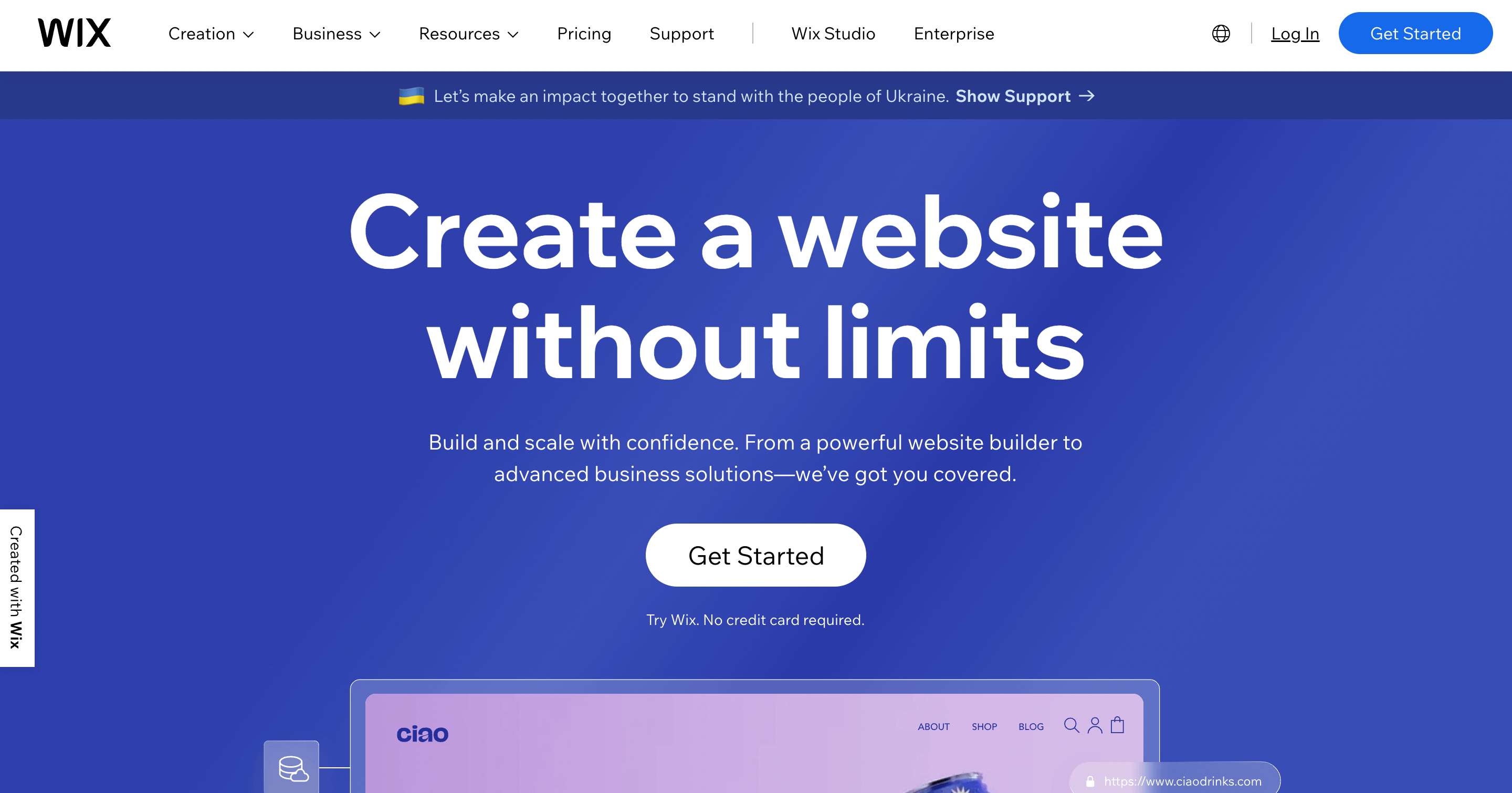
Recognized as a top content management software, Wix is an all-in-one CMS platform for creating brand-new websites and implementing advanced business solutions. Incorporating enterprise-level infrastructure into each site, along with dependable free web hosting, ongoing maintenance, and fully managed security, Wix ensures a seamless operation of your website.
With Wix, you can bring your vision to life quickly and effortlessly using a fantastic library of 1000+ ready-made, customizable templates and features. Additionally, you get access to a great marketing toolkit to promote your website through SEO, AI-powered ads, email campaigns, and engaging social media posts.
Wix is undoubtedly one of the most popular CMS companies in the world.Over 220 million people have already chosen it to expand their online presence while benefiting from 24/7 customer support. With that said, Wix’s recurring payment options are limited, so you may want to integrate a tool like Subbly if you’re running a software or subscription box business.
Key features:
Drug-and-drop website builder
A vast collection of website design templates
eCommerce features
Mobile optimization
SEO tools
Blog integration
Security and hosting
24/7 customer support
Analytics and reports
Pricing:
Wix gives you 100 templates, unlimited pages, and top-grade hosting absolutely for free. If you want to get more possibilities, you can upgrade to one of the Premium plans:
Website plans: from $4.5 to $24.5 per month.
Business and eCommerce plans: from $17 to $35 per month.
With an impressive market share of over 60% among websites built with CMS platforms, WordPress is deservedly the best content management system for businesses of all types and sizes. Being especially popular for blogging, it serves as an ideal CMS solution for branding purposes.
WordPress provides a wide range of web development services covering website design and building, hosting, domain name, blog and newsletter, online store, courses, as well as enterprise solutions. A notable advantage of WordPress is it offers an incredibly broad range of functionalities at an affordable cost starting from just €9.
One of the most compelling features of WordPress is its extensive selection of ready themes and plugins. These budget-friendly and easy-to-implement plugins range from SEO, eCommerce, and social media functionalities to sophisticated cybersecurity features; you’ll find absolutely everything tailored to your specific needs.
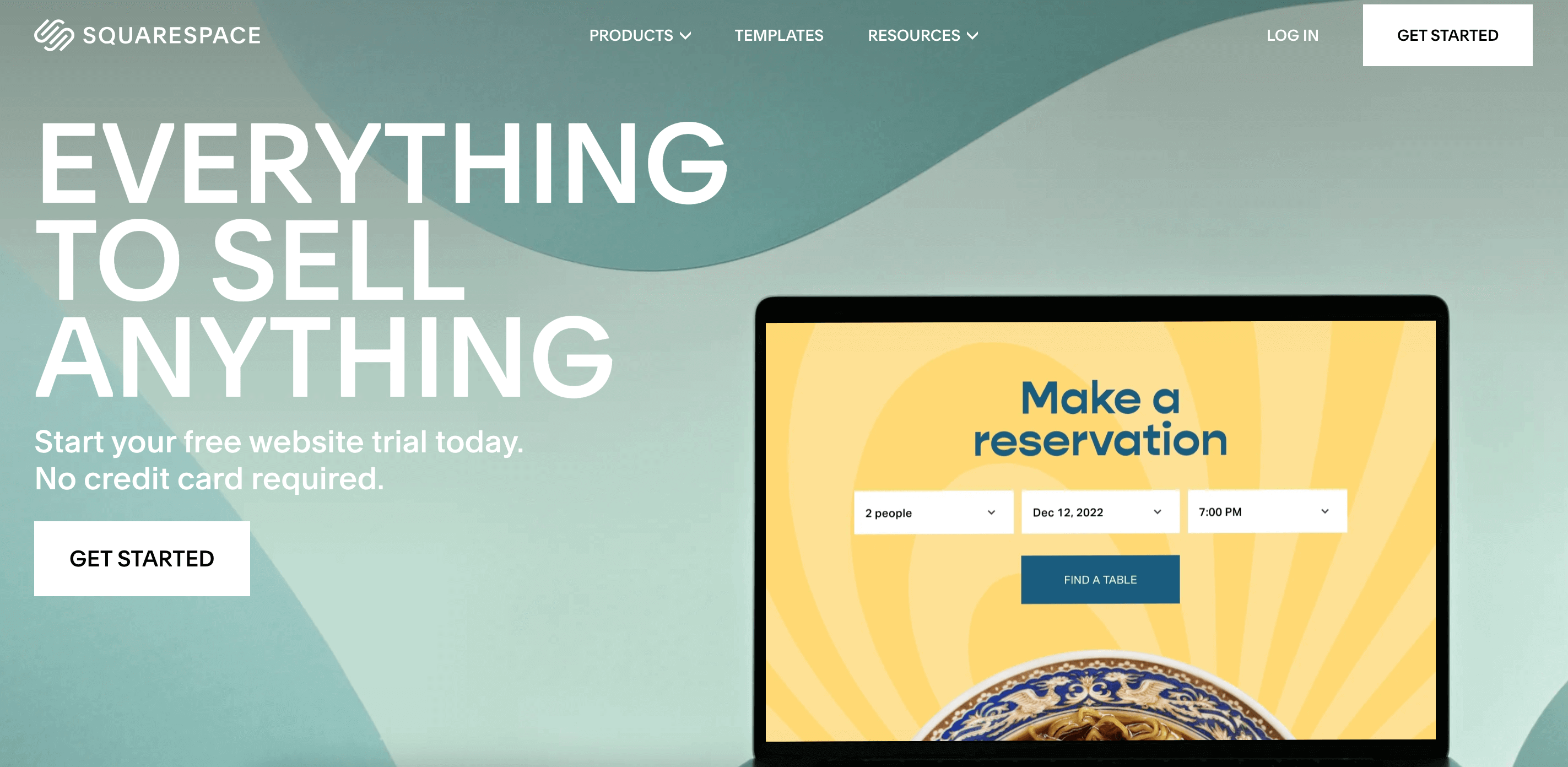
Squarespace has established itself as one of the best content management systems. With a strong focus on eCommerce websites, the platform shares hundreds of customized templates so you can showcase your products at their best. In addition, Squarespace enables you to manage shipping and fulfillment, handle taxes, process payments, and more – all in one place.
The system caters primarily to the following groups of users: artists, bloggers, content creators, restaurants, beauty and fitness professionals, photographers, as well as enterprises. With Squarespace, the process of selling has never been easier and more engaging.
Key features:
Website builder
Ready-made templates
Blogging platform
In-depth website analytics tools
Marketing tools
Domain name
eCommerce solutions
Store management
Marketplace to sell products and services
Integration with third-party services
24/7 customer support
Pricing:
Squarespace offers a free 14-day trial period and 4 paid plans with up to 40% savings on its annual billing:
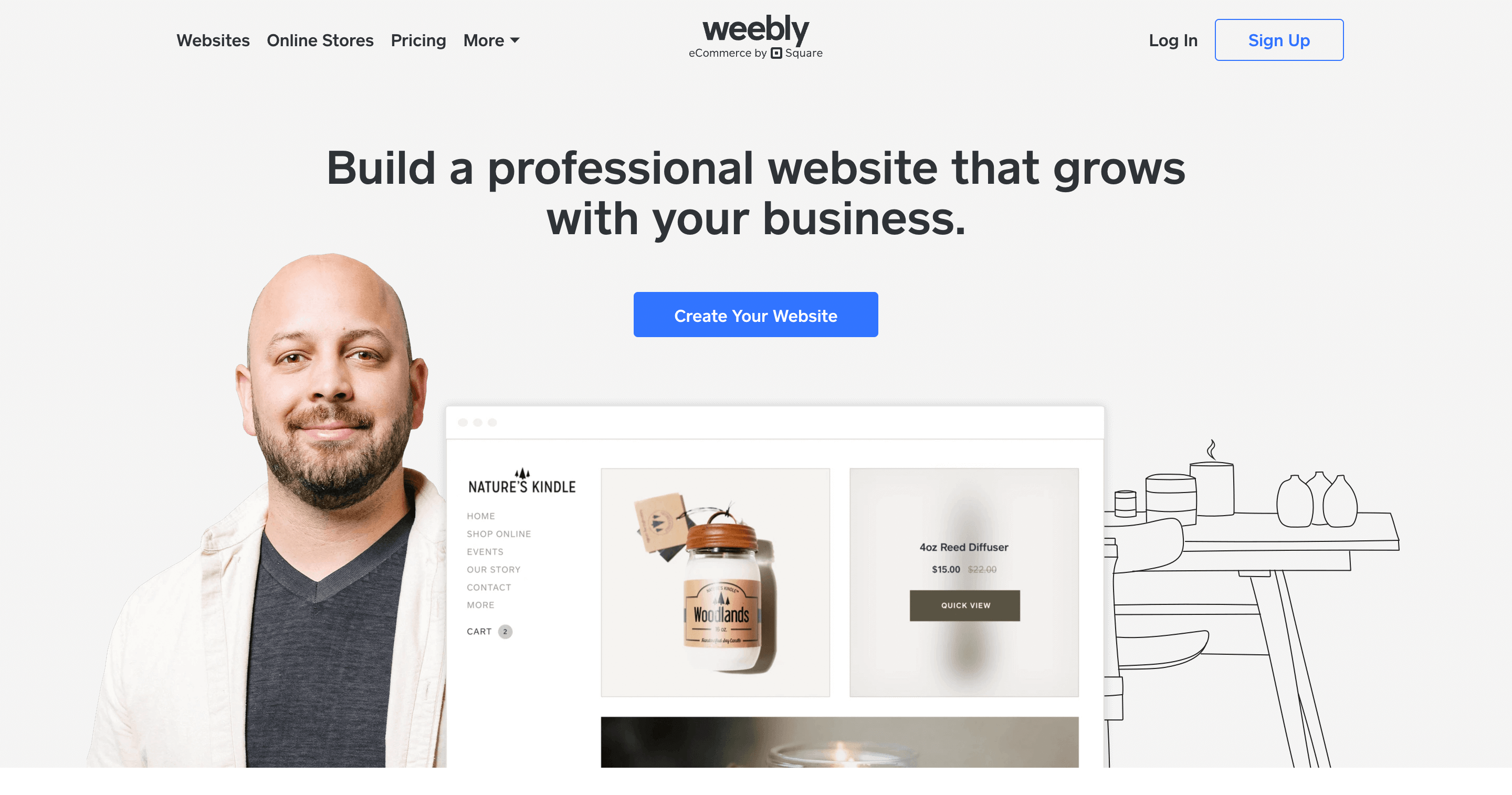
Weebly is the perfect content management software for small businesses, offering an enticing blend of robust features and budget-friendly pricing. Affordability sets Weebly apart. Their pricing plans range from $10 to $26 per month, making advanced features accessible for startups, novice entrepreneurs, and creative minds without compromising quality.
Using customizable templates and drag-and-drop elements, users can easily build unique websites with a personal touch, incorporating features like eCommerce support, blog, gallery, and more. When your website is ready, you will get assistance at every step to launch your online store with full confidence and zero mistakes.
Key features:
24/7 email and chat support
Blogging platform
Digital marketing tools (SEO, SMM, AdWords)
Hosting
SSL security
Domain management
Mobile app
Integrated analytics
Website builder with an option to customize a website with HTML/CSS & JavaScript
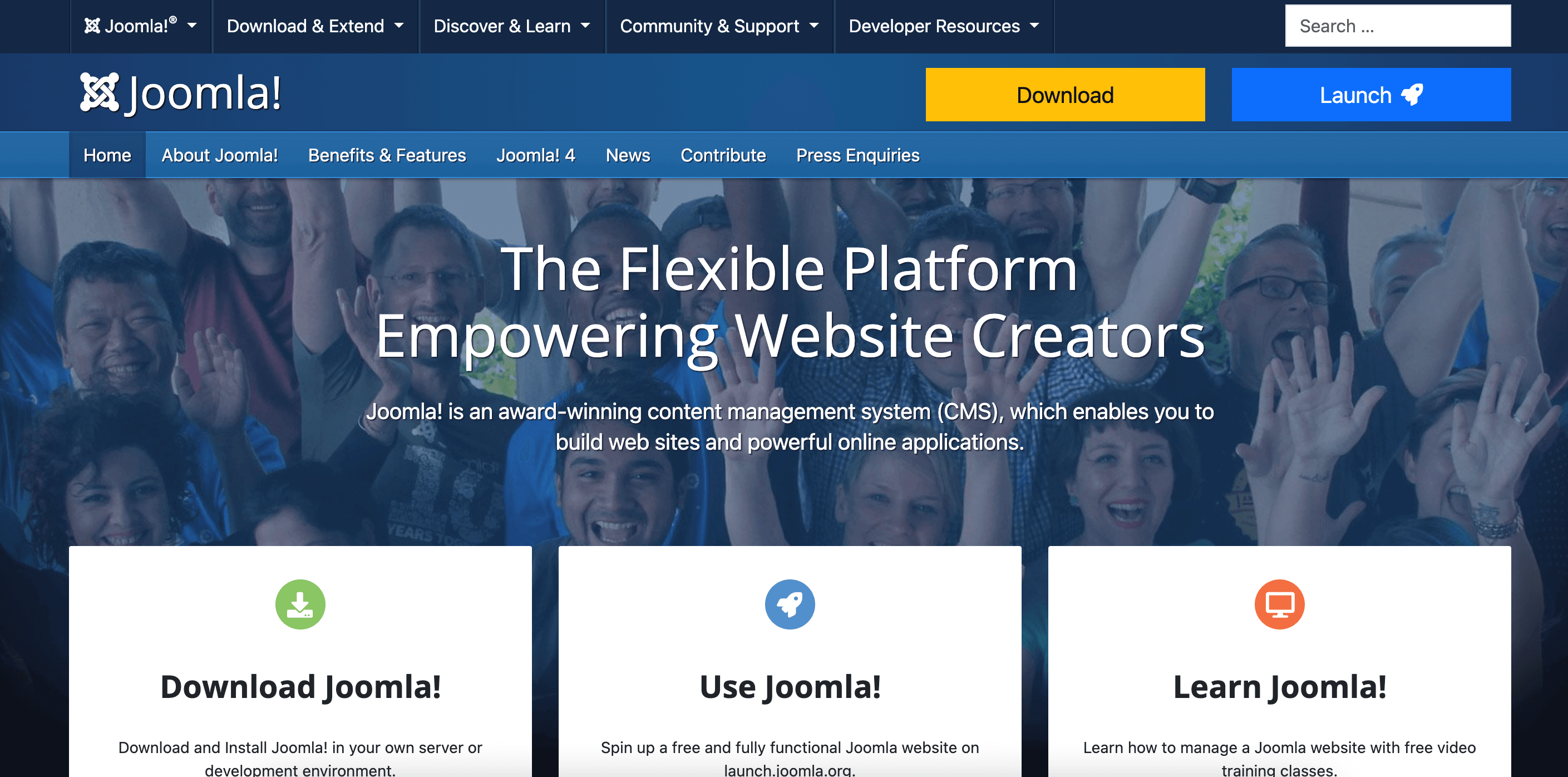
Joomla is one of the top CMS systems that helps startups and large organizations create dynamic and interactive websites. Also, this platform is in high demand among software agencies due to its wide spectrum of comprehensive features for website design, development, and management, requiring minimal instructions. For non-techies, it will be really easy to install and make the most out of Joomla.
The platform can be used to build the following types of websites: corporate websites, online magazines, newspapers, eCommerce stores, government, non-profit, community-based, public, and online reservations. The best part of it is that Joomla is a totally free, open-source website content management platform. So why not try it right away?
Key features:
Multilingual platform: supports 70+ languages
SEO tools
A variety of content types, including articles, blog posts, media, and custom content
Custom content types, fields, and categories tailored to specific requirements
Content editing and publishing tools
Flexible framework
Global and professional support
Thousands of extensions and templates
Pricing:
Joomla is open-source software and is available for free.
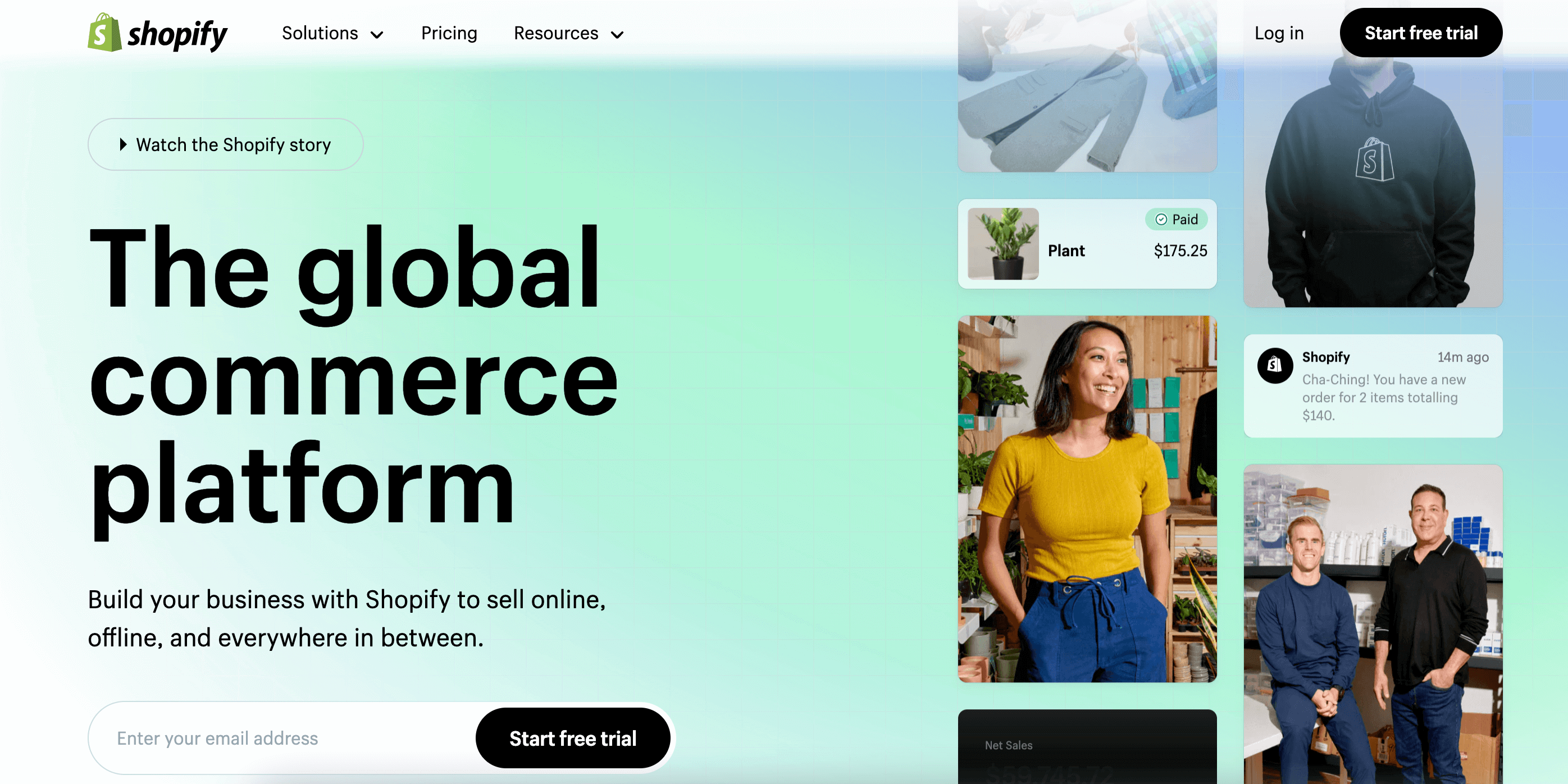
Shopify is a leading eCommerce CMS platform that helps businesses to establish, manage, and expand their online stores. It provides all-in-one eCommerce solutions, including payment processing, shipping benefits, inventory management, and, for selected sellers, even access to loans.
Starting at $29 per month, Shopify offers three paid subscription plans. Every Shopify plan includes a full set of business management and online selling tools: product sourcing, sales and inventory monitoring, payment processing, shipping, customer accounts, marketing tools, and analytics. Start selling easily and effectively from day 1 with one of the best content management systems ever!
Key features:
eCommerce builder
Website design and templates
Domain and hosting
Shopping cart and checkout
Payment integrations
International and B2B sales
Marketing tools
Product management
Customer support
Shipping and fulfillment
Pricing:
Shopify offers you to try 3 days for free, and then enjoy your first 3 months for just $1. Then, you can go with any paid plan, getting up to 25% savings on its annual billing.
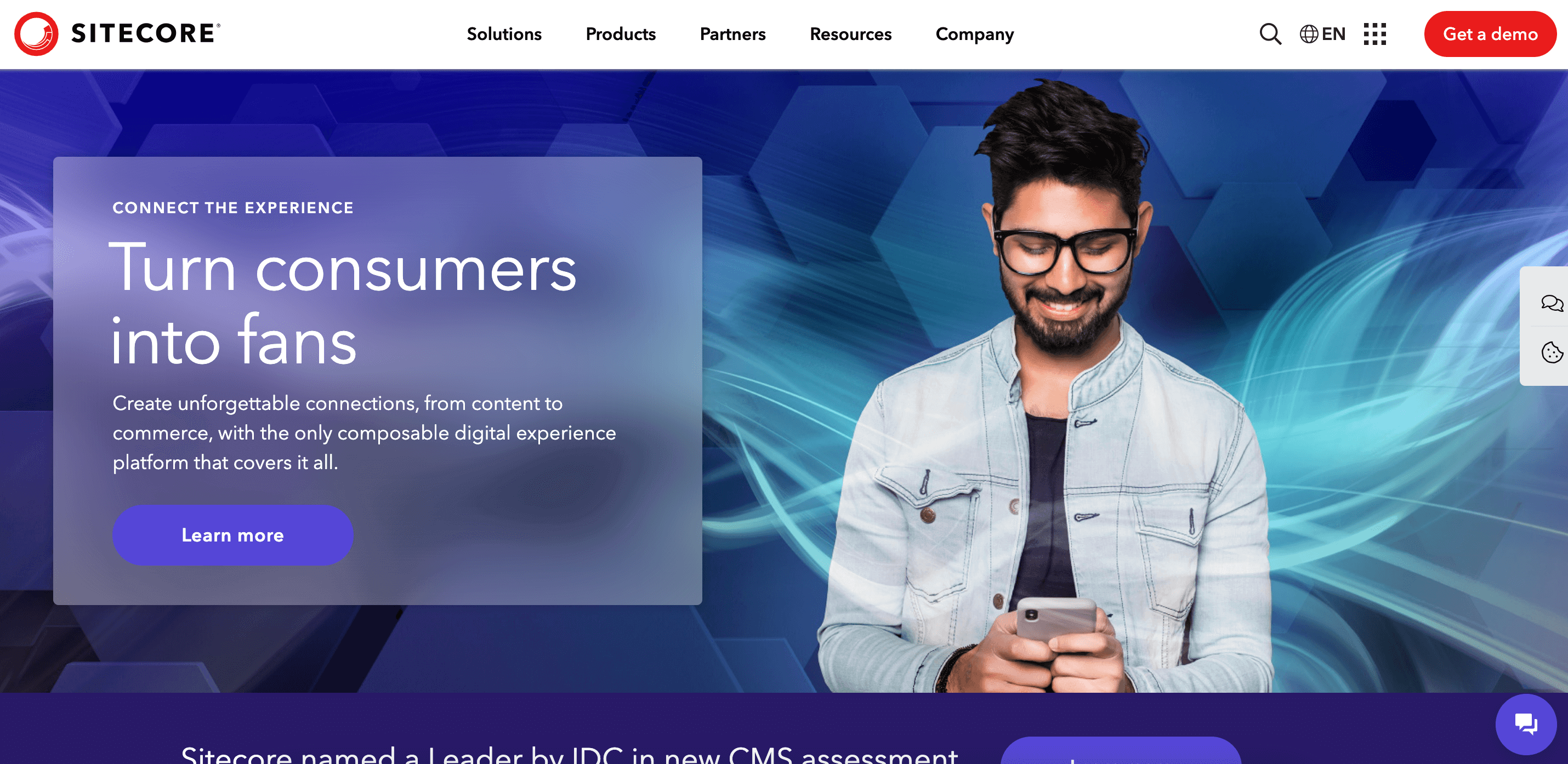
Sitecore provides a variety of CMS tools, from content management to customer data management, marketing automation, and order management. It was recognized as a leader in the Hybrid Headless Content Management Systems category by the top analyst firm, IDC, showcasing Sitecore’s exceptional expertise and authoritative position in headless CMS solutions.
Sitecore is a perfect CMS platform for small businesses,providing both content and customer experience management within a single integrated solution. This dual functionality enables website owners to seamlessly organize and deliver content to individual users based on their preferences, behaviors, and interactions.
Key features:
Content management
Customer experience management
Storefronts and marketplaces
Digital asset management
A/B testing and optimization
Digital marketing tools
Multichannel experience
eCommerce integrations
Security
Customer support
Pricing:
Contact Sitecore to get a custom price based on your needs.
Kentico Kontent is one of the top CMS platforms aimed at helping clients maximize ROI and deploy new content faster by 90%. Being a headless CMS system, Kentico allows you to easily adapt and publish content across multiple channels, such as websites, mobile apps, and even IoT devices, passing by the constraints of a traditional CMS.
The platform is mostly used in industries like manufacturing, education, healthcare, finance, insurance, retail, travel, software, and technology. It provides developers with the tools to integrate content into various applications, enhancing user experience. Kentico’s built-in localization capabilities make it one of the best enterprise CMS vendors, allowing content to be adapted for different regions and languages.
As one of the best open-source and most flexible CMS platforms, TYPO3 has a large global community. With a focus on enterprise-level applications, TYPO3 allows users to manage and deliver digital content across various platforms at scale.
The modular structure and a huge library of extensions offered by this CMS enable users to customize websites and applications to perfectly suit their unique requirements. TYPO3’s multilingual support, robust user permissions, and comprehensive content management make it a favored choice for large organizations with complex web projects.
Drupal is a famous CMS system adored by millions of users for its versatility and great customization capabilities. Built on a robust framework, it allows you to create and manage different types of websites, from simple blogs to complex enterprise portals.
As an open-source solution, Drupal offers a cost-effective option for businesses and individuals seeking to establish a strong online presence with tailored features and functionalities. Benefit from the power of the largest open-source community!
Key features:
Security and protection
Performance and scaling
Multilingual translation
Marketing automation
Content authoring
Personalization
Content as a service (from blog posts to white papers, emails, webinars, etc.)
Numerous themes and templates
API support
Website builder
Third-party integrations
Pricing:
Drupal is open-source software available for free.
Hygraph — A Berlin-based, enterprise-grade headless CMS built around a GraphQL-native, API‑first architecture. Hygraph goes beyond traditional content systems with its Content Federation capability, enabling brands to unify internally authored content and data from external sources into one composable API endpoint — without migrating legacy systems
Designed for scale and global digital teams, it offers built-in localization, customizable editorial workflows, real-time collaboration, granular permissions, and world-class security certifications such as SOC 2 Type 2 and GDPR compliance. Content is delivered via a global CDN and low-latency GraphQL endpoints, ensuring performance and flexibility across all devices and frameworks.
Key features:
GraphQL-Native API-first Architecture
Content Federation
Flexible & Low-Code Content Modeling
Localization & Multi‑Region Support
Role-Based Access Control & Editorial Workflows
Digital Asset Management (DAM)
Collaboration & Editorial Efficiency
Webhooks & Extensibility
Scalable & Secure Enterprise Infrastructure
Pricing:
Hobby (Free forever) – $0/month
Growth (Self-Service) – Starting at $199/month (billed annually) or $299/month (with monthly billing)
Scale- Around – $799/month (billed annually) for larger teams
Enterprise – Custom pricing available (starts approximately at ~$2,500/month or $30,000/year)
Types Of CMS: Traditional, Headless And Website Builders
Website builders such as Wix, Squarespace and Weebly are hosted, all-in-one platforms with drag-and-drop editing, templates and hosting included in a monthly plan. They are the fastest way for small businesses to launch, with less flexibility for complex needs.
Traditional CMS platforms such as WordPress, Joomla, Drupal and TYPO3 manage content and render the website together. Most are open source and free to use, but you pay for hosting, themes, extensions and developer time, in exchange for far more control.
Headless CMS platforms such as Kentico Kontent and Hygraph store content and deliver it through APIs to any front end, such as websites, apps or digital signage. They suit teams with developers that publish to several channels.
Enterprise digital experience platforms such as Sitecore add personalization, customer data and marketing tools on top of content management, usually under custom enterprise licensing.
How To Choose A CMS Vendor
Start with who will edit content. Marketing teams without developers need a friendly visual editor; developer-led teams can take advantage of headless flexibility.
Map your channels. One website fits a traditional CMS or builder, while websites plus apps and other channels point to headless.
Compare total cost. Include subscription or license fees, hosting, extensions and ongoing developer support, not just the entry plan.
Check scalability and security. Look at performance under traffic, user roles and permissions, updates and compliance needs.
Look at integrations. Make sure the CMS connects with your CRM, marketing automation, analytics and ecommerce tools.
For most B2B websites, WordPress offers the best balance of flexibility, integrations and editor-friendly tools. Enterprises with large content operations and personalization needs often choose Sitecore or Drupal, while companies publishing to several channels may prefer a headless CMS such as Hygraph or Kentico Kontent. Teams using Storyblok can compare top Storyblok CMS developers.
What Is The Difference Between A Headless CMS And A Traditional CMS?
A traditional CMS manages content and builds the website pages in one system. A headless CMS only manages content and delivers it through an API, so developers can build any front end, such as websites, mobile apps or other devices. Headless gives more flexibility across channels but needs more development work.
Which CMS Is Best For Small Businesses?
Small businesses without developers usually do best with a website builder such as Wix, Squarespace or Weebly, which include hosting, templates and support in one plan. WordPress is a strong option for small businesses that want more flexibility and are comfortable managing hosting and plugins. Shopify is the natural choice if selling online is the main goal.
Conclusion
The market of the top CMS platforms offers a multitude of choices for businesses of all sizes, whether they need eCommerce integration, custom templates, multilingual and global support, content personalization, or cloud-based solutions.
These tools have evolved into essential components of successful digital strategies, streamlining content management and driving business growth.
Hopefully, this article serves as a useful guide to help you find the best website content management platform that meets your needs.
If you want to add your CMS system to this list, contact us with details. After a thorough review, we’ll decide whether it’s a valuable addition.