Best Web Designers For Corporate Rebranding Projects
Daria Pohrebniak
Marketing Director - Reverb
27.01.2026
A rebrand only feels “real” when the website carries it without friction. If the pages load slowly, the structure is messy, or the UI still reflects the old company, the new identity starts losing credibility in seconds.
That’s why the best web designers for corporate rebranding projects focus on the bones of the site — navigation, hierarchy, and user paths — not just the paint.
Every rebrand brings a different kind of mess to solve. One team needs a clean migration without breaking revenue, another needs a rebuild that multiple departments can maintain, and another has to unify regional sites under one system. The studios below cover those scenarios, so you can line up the right skill set and keep corporate web design services moving.
Shortlist Of Top Web Designers For Corporate Rebranding Projects
Realm Web Design is a Shopify shop through and through — Shopify and Shopify Plus, nothing else. That narrow lane works in your favor during an e-commerce rebrand, because the design has to support the new brand while still pushing carts to checkout. Since 2007, they’ve stayed close to the platform and built a repeatable way of getting stores shipped without drama.
Theme builds and migrations are where Shopify projects usually win or lose, so Realm spends time on the unglamorous parts: templates, speed, and how the storefront behaves on real devices. The small team keeps decisions close to the work, which makes rounds of feedback move quickly. It’s a good fit when you want the same partner handling the build and the ongoing tweaks after launch.
Services and expertise: Shopify/Shopify Plus builds, migrations, custom themes, apps, SEO, content, conversion work
Location: Duluth, Minnesota, USA
Team size: 10 experts
Industries: E Commerce, Retail, Fashion & Lifestyle
IDP (Internet Design & Publishing) has handled website rebuilds for Kansas City companies since 2003, which means a large share of its work is second and third generation sites for businesses that have outgrown what they had. A corporate rebranding project is where that experience pays off: IDP plans, designs, builds, and migrates the site with full-time in-house developers, so the new brand launches without losing the rankings, redirects, and integrations the old site had accumulated.
The firm builds custom WordPress themes rather than adapting templates, which keeps the rebrand faithful to the new identity instead of forcing it into a theme’s constraints. Hosting on IDP-owned servers in Kansas City and ongoing maintenance are part of the same engagement, so the partner that executed the digital rebranding stays accountable for it afterward. Named projects include Thoroughbred Ford, Lavalier, and Mover’s Choice Insurance.
Services and expertise: Website redesign and rebranding, custom WordPress themes, site migrations and redirects, SEO preservation, custom PHP integrations, managed hosting, ADA compliance
AKQA is built for scale, with teams that blend brand, experience, and technology across a global network. That helps when rebranding touches campaigns, product UX, and enterprise websites with many stakeholders. Their client history and award recognition point to deep experience under scrutiny.
AKQA fits best when the rebrand is part of a wider digital rebranding effort, not a single site refresh. Brand identity work can connect directly to experience design, content, and product thinking, so the site feels consistent across channels. For organizations that want one lead partner coordinating multiple disciplines, that structure can reduce friction.
Services and expertise: Experience design, digital product design, brand identity, creative technology, content, growth strategy, AI innovation
Location: Global (Headquartered In London With Studios Worldwide)
Team size: 6000 experts
Industries: Luxury, Automotive, Gaming, Travel, Health
Work & Co builds sites and products that don’t fall apart once real users start clicking around — which is exactly where many rebrands get exposed. Strategy, design, and engineering sit in the same working loop, so decisions don’t ping-pong between separate vendors and separate timelines. With studios in several cities, they’re comfortable running big launches with lots of moving parts.
When a company needs best web design companies for corporate rebranding, this kind of team focuses on how people move through the site to complete real tasks. They’ll sort accessibility early, plug in the necessary integrations, and keep load times under control while the new UI takes shape. If a full switch isn’t realistic, they can release the rebrand in phases so everyday operations keep running.
Services and expertise: Product strategy, UX/UI, brand identity, full stack development, commerce, integrations, DevOps, accessibility
Location: Brooklyn, New York, USA (With Studios In Multiple Cities)
A lot of teams pick Ramotion when the rebrand has to show up everywhere, not only on marketing pages but inside the product too. With roughly 70 experts and 350+ projects, they’ve built a repeatable way to get stakeholders aligned and move to launch without chaos. Having offices in San Francisco, Los Angeles, and New York also helps when collaboration needs to stay tight across distributed teams.
The work usually starts by setting rules the team can actually build with, then turning those rules into a site that holds up over time. That’s why they’re hired for best web redesign services where consistency matters: reusable components, design tokens, and documentation that keeps future changes from drifting. Along the way they cover brand strategy and identity, plus web, app, and motion design, with ongoing support for teams scaling quickly.
Services and expertise: Brand strategy, visual identity, web/app design, design systems, motion, web development, ongoing UI/UX
Location: San Francisco, California (Also Los Angeles And New York)
Team size: 70 experts
Industries: Technology, Media & Entertainment, Fintech, Healthcare, Education
Rebrands don’t end at launch, and Happy Cog is built for the work that comes after. The team can handle brand and UX decisions, build or rebuild on a CMS, connect integrations, and keep refining performance as results roll in. With New York as the home base and a Philadelphia office, they’re easy to work with for U.S. teams that want steady collaboration.
They work well when a rebrand includes a brand refresh plus continuous iteration rather than a single handoff. Teams can start with strategy and UX planning, move into design systems, then build and maintain on platforms like WordPress or Craft. A notable portfolio example includes repositioning Morphe ahead of a major rebrand.
Services and expertise: Strategy, naming, UX/UI, design systems, CMS development, integrations, maintenance, analytics, CRO, AI implementation
Location: New York, NY (Also Philadelphia)
Team size: 51 experts
Industries: Fashion, Education, Biotech, Law, E Commerce, Editorial
Portfolio: Morphe cosmetics and other corporate and e commerce projects
AREA 17 brings an integrated view of brand, experience, and technology. That structure helps when a rebrand needs to show up in messaging, interface behavior, and platform planning at the same time. With studios in Paris and Brooklyn, they’re comfortable working across cultural contexts and stakeholder groups.
They’re a strong option for teams that want corporate web design grounded in research and a clear system before the build starts — especially when governance is complex. Their work often includes toolkits and design systems that support multi-team delivery over time. This is a good fit for institutions and brands that need rigor and consistency.
Dogstudio sits where brand storytelling meets interactive execution. That’s useful when a rebrand needs to feel alive through motion, design, and immersive web moments, not just static pages. As part of the DEPT® network, they can tap broader resources while keeping a studio feel.
They’re a fit for organizations that want best web design companies for corporate rebranding to create distinctive experiences for launches, campaigns, and cultural work. Their portfolio spans technology brands, museums, festivals, and immersive digital projects. Teams that want memorable design without sacrificing clarity often look for that balance.
Services and expertise: Brand strategy, art direction, digital product design, emerging tech (AR/VR/AI), installations, animation, illustration
Location: Chicago, USA; Amsterdam, Netherlands; Paris, France
Team size: 10 experts
Industries: Arts & Culture, Entertainment, Technology, Events
Portfolio: Microsoft, Tomorrowland, Virgin Galactic, Museum of Science & Industry Chicago, The Kennedy Center, Quanta Magazine
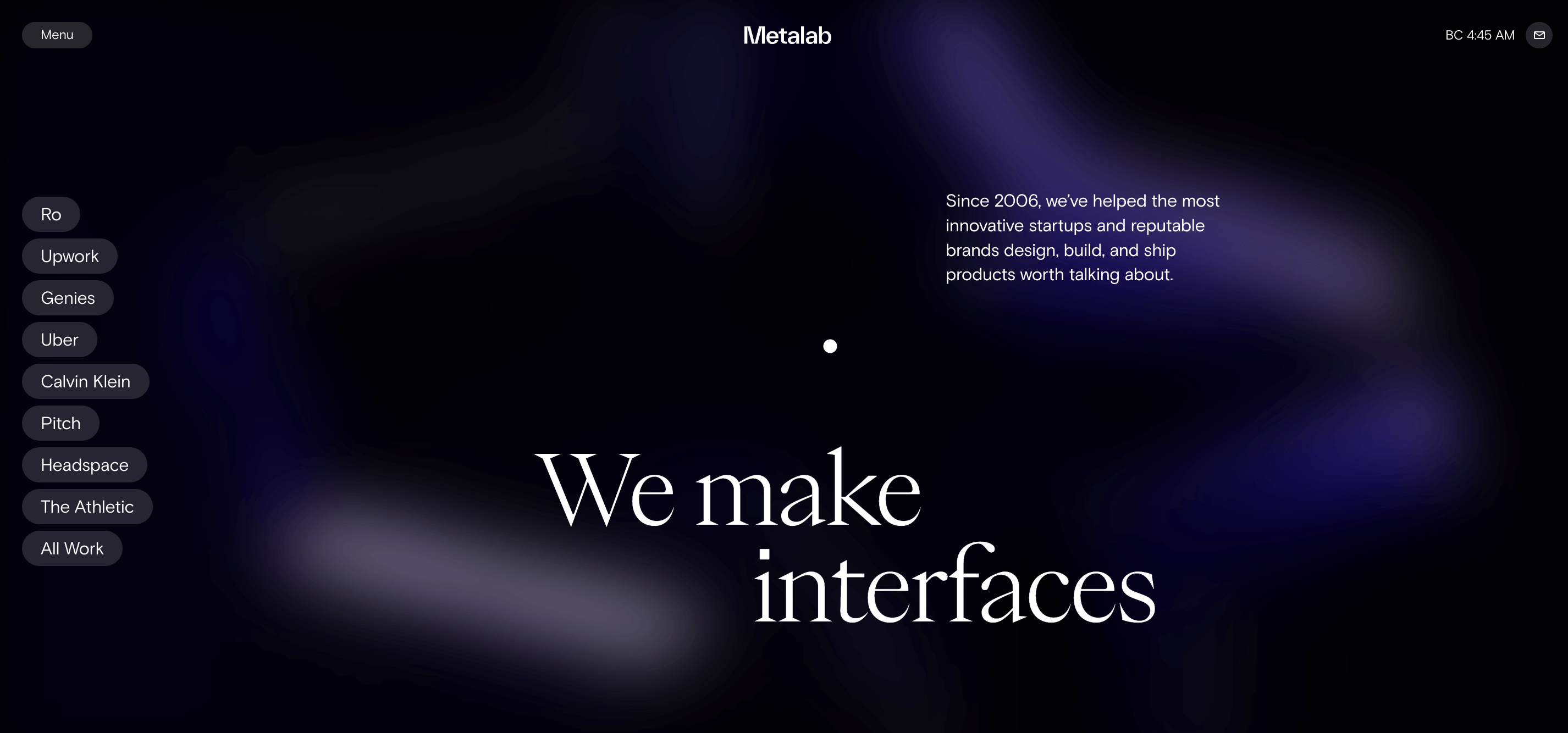
In software, the interface is where a rebrand either lands cleanly or turns into friction. MetaLab puts most of its weight there, pairing UX and UI decisions with brand systems and product build work so teams aren’t juggling handoffs. Because their staff is spread across countries, projects can keep moving even when decision-makers are in different time zones.
They’re a strong choice for organizations that need corporate web design services aligned with product experience, especially in SaaS and fintech. The ability to connect brand systems to component libraries helps keep rebrands consistent inside the product and across the marketing site. That foundation matters when internal teams will maintain the system post-launch.
Services and expertise: Product strategy, UX/UI, brand systems, software engineering, product development
Location: Victoria And Vancouver, British Columbia, Canada (Teams Across Multiple Countries)
thoughtbot combines product strategy, design, and engineering with a consulting style that often strengthens internal teams. That’s valuable when a rebrand must ship while the organization keeps building and hiring. Their discovery sprints help clarify scope early, so delivery doesn’t drift.
They’re well suited for best web redesign services tied to implementation, not just design files. Teams can modernize UX, align a design system, and ship in reliable stacks with attention to performance and maintainability. The model also supports augmentation and fractional leadership when senior support is needed without a long commitment.
Services and expertise: Discovery, UX/UI, design systems, web/mobile development, AI/ML, DevOps, cloud, team augmentation, fractional leadership
Location: Boston, Massachusetts, USA (Also New York And London)
Team size: 50 experts
Industries: Healthcare, Finance, Insurance, Education, Media & Publishing
Portfolio: Harvard Business Review, Digital Ocean, Mailchimp, Planned Parenthood, MoMA, Kickstarter, Disney
Lounge Lizard works well for rebrands where brand, site, and marketing need to stay aligned without bouncing between vendors. With several U.S. offices, teams can run real-time working sessions when decisions pile up. Their wide industry mix also helps when leadership wants familiar comparisons, not abstract mood boards.
When the brief calls for a visual identity overhaul, they can carry it past the logo and into the website experience and launch plan. UX choices, messaging, and conversion targets get tied together early, then supported with SEO, paid media, and performance work once the site is live. That keeps momentum after launch and reduces the “who owns this now?” problem.
Services and expertise: Brand strategy, corporate identity, UI/UX, web design and development, e commerce, CRO, SEO, PPC, content, social
Location: Multiple U.S. Offices (Including New York City, Washington DC, Miami, Los Angeles, Austin)
Team size: 10 experts
Industries: E Commerce, Finance & Fintech, Healthcare, Hospitality, Law, Real Estate, SaaS, Technology
Portfolio: Andersen Global, Colorado Rafting, Night of Mystery, Evolve Bank & Trust
Choosing A Rebrand Partner That Ships
A strong partner takes chaos out of the work: the scope is written plainly, tradeoffs are called early, and the plan can survive rounds of approvals without ballooning. If you need governance and scale, pick a team that can coordinate strategy, design, and build without dropping the small stuff — that’s where top web designers for corporate rebranding projects justify their value.
You’ll feel it in week one. Ask them to map the messy parts: moving legacy content, keeping accessibility from slipping, and setting up components your team won’t hate six months later. Then get specific about after launch — who handles fixes, how updates roll out, and what “iteration” really means in their hands. That’s where best web designers for corporate rebranding projects separate from studios that stop at a clean homepage.
If you’re a web designer and want to feature your company on this list, email us or submit a form in the Top Choices section. After a thorough assessment, we’ll decide whether it’s a valuable addition.